What are you looking for?

Advances in AI and communication technologies are enabling continuous, personalized conversation between brands and consumers before, during and after the point-of-sale experience.
Shoppers can converse with voice-activated apps like Google Assistant, for example, and with proprietary chatbots launched by Zara18 and other brands to conveniently discover and purchase products. These generative AI agents and modern point-of-sale (POS) systems are transforming the shopping experience, fostering deeper consumer connections.
Generative AI shopping co-pilots provide personalized recommendations and support throughout the consumer journey while simultaneously gathering valuable insights into individual preferences and intent. This dual benefit boosts engagement and allows retailers to anticipate and meet consumer needs more accurately, fostering long-term loyalty and satisfaction.
(Read more about personal co-pilots in
the Q1 edition of Mastercard Signals.)
Conversational commerce first emerged with the rise of social commerce, where consumers explore and purchase products through social media platforms including TikTok Shops, Amazon Live, WeChat and Instagram Live. This paradigm shift transformed consumer-brand interactions by removing friction and creating a more engaging journey, according to McKinsey research.20
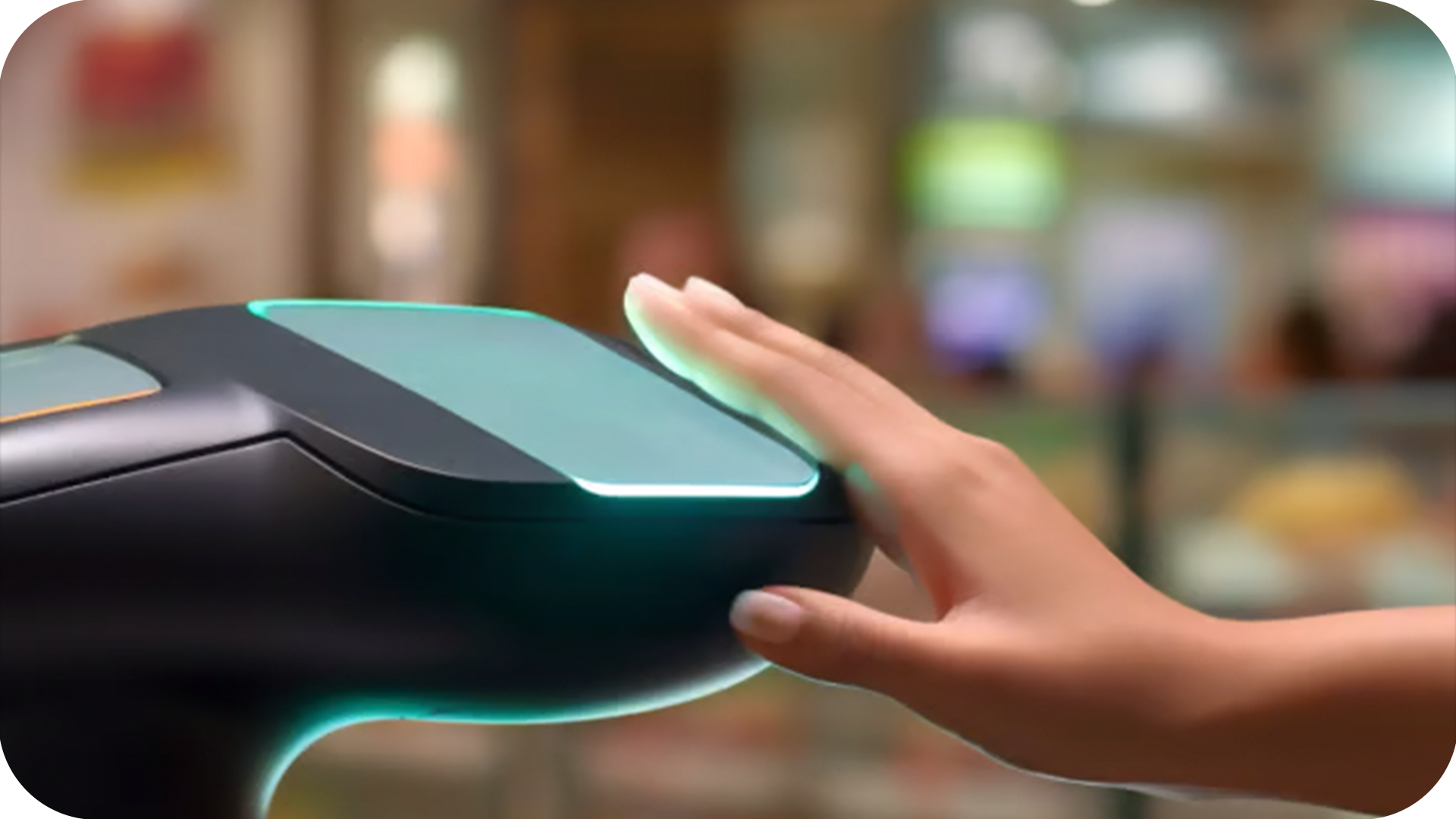
Modern POS systems are central to retail companies’ sales, inventory and customer relationship management functions. They are becoming pivotal to customer engagement strategies by tracking shopper preferences, providing valuable analytics, and facilitating interactive in-store experiences and communication.
UWB and other communication channels can support the issuance of digital and co-branded cards at any stage of the in-store shopping experience and deliver personalized marketing to digital signs or shoppers’ devices based on their precise navigation.
These technologies eliminate the need for a fixed POS by supporting unattended checkout, allowing shoppers to scan and pay for products themselves using self-service kiosks or mobile apps. This can improve the shopping experience by offering convenience and speed for the shopper, while reducing operational costs.
After purchases are made, retailers can bolster their engagement with their customers by using convenient communications channels to provide digital receipts, warranty details and other information. The latter might include details on how to return an item and even eventually re-sell it back to the retailer as part of an environmentally aware “sell-back” program
Large retailers are leading the way. Amazon, Walmart, Nike, Starbucks and Target use AI, machine learning (ML) and advanced data tools to analyze consumer behaviors and preferences, allowing them to personalize marketing, shopping experiences and product recommendations.
WeChat’s conversational shopping feature allows brands to sell products leveraging WeChat’s chatbot and reach their users in new and engaging ways. The chatbot helps shoppers browse brands’ products, receive style advice and purchase products without leaving WeChat.
Emerging use cases, such as virtual try-ons and home visualization apps, are expected to see widespread adoption due to their ability to enhance customer confidence and reduce returns.
Ensuring accurate and user-friendly technology for body scanning and AR/VR experiences is challenging, and the current cost of MR devices is an impediment. However, as technology advances and costs decrease, retailers that can address privacy concerns and offer seamless, valuable and immersive experiences could lead the way in redefining the e-commerce landscape.
[18] https://juphy.com/blog/the-importance-of-personalization-in-conversational-commerce
[21] https://www.statista.com/statistics/1251145/social-commerce-share-worldwide/
[22] https://www.researchandmarkets.com/reports/5578574/china-social-commerce-market-intelligence-and
[23] https://channelx.world/2023/11/new-mastercard-shopping-muse-ai-based-shopping-tool/