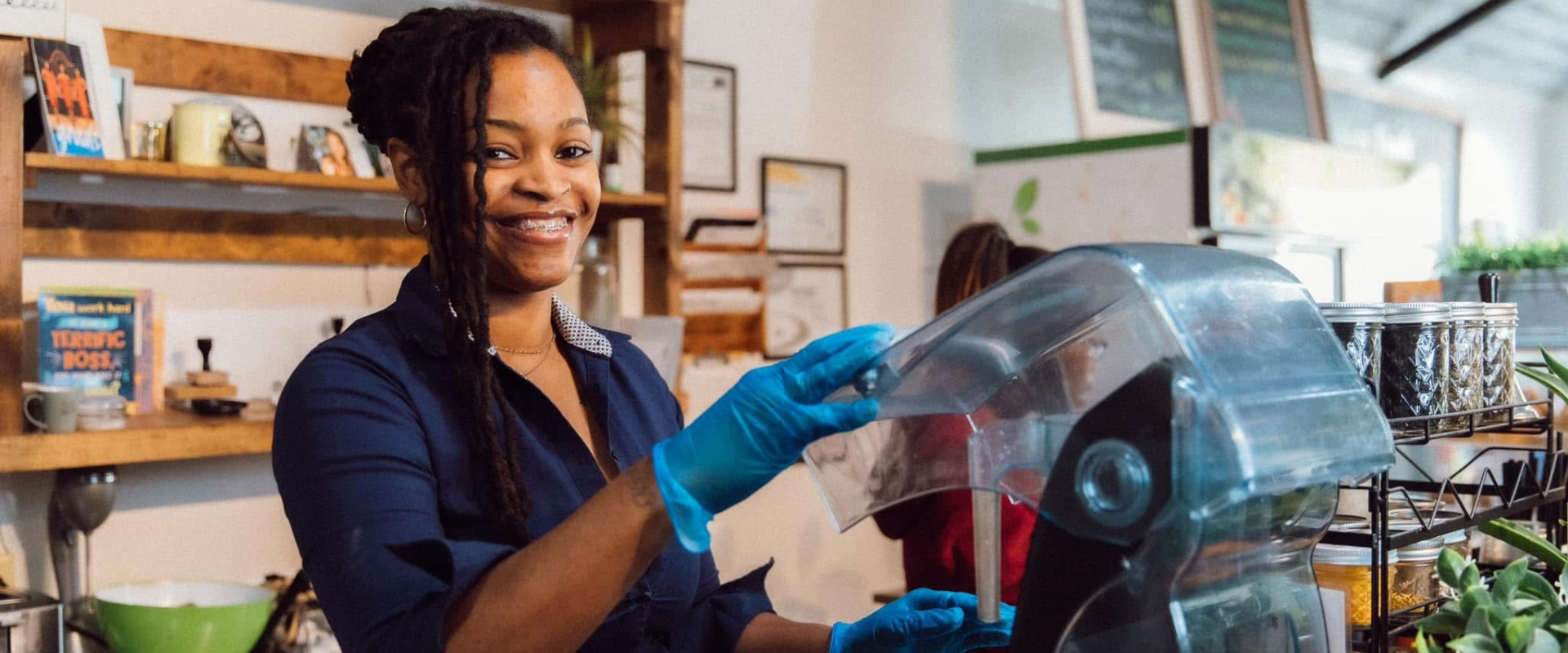
Working as a waitress in Greenville, a small city of less than 30,000 nestled in the heart of the Mississippi Delta, Kenesha Lewis thrived off the strong connections she created with her regular customers and dreamed of one day starting her own business.
After working her way up to become a restaurant manager and later district training manager, she transitioned to a career in finance and banking. But entrepreneurship still beckoned, and in 2018, she started making fruit arrangements and then began experimenting with making smoothies after work to kick a life-long sugar addiction. And before long, she solidified her idea that would mix her passion for people with her growing interest in healthy eating.
When people started lining up at 6 a.m. for a taste of her fruit concoctions, Lewis and her husband Jason decided to use their savings to start their own smoothie shop.
But they quickly realized running a business demanded more than hospitality experience. They turned to the Higher Purpose Hub and Delta Compass — two local organizations with roots as business development organizations, whose resources, such as training and mentorship, help create economic opportunities in rural Mississippi.
Based an hour north of Greenville, Higher Purpose is one of several dozen business development organizations, known as BDOs, backed by Rural LISC, the rural arm of Local Initiatives Support Corporation, one of the biggest community development financial institutions in the country. CDFIs are specially certified financial institutions with a mission to provide services to vulnerable communities — from urban centers to rural regions often overlooked by traditional banks.
For entrepreneurs like Lewis, CDFIs like Rural LISC are a vital stepping stone to building the financial and digital skills needed to develop small businesses that are the lifeblood of rural areas where one in five Americans live.
Set up 30 years ago, Rural LISC focuses, in part, on helping business owners deal with challenges such as small markets, inadequate financing opportunities and, in recent years, lack of technology and internet connectivity, says Nadia Villagran, Rural LISC director and LISC vice president.
The child of Mexican immigrant parents who worked around the clock to provide for their family, Villagran understands the need for CDFIs to match the “sweat equity” people invest in their businesses with appropriate services and resources.
“In rural communities, people have these great ideas, but it’s a struggle to build the muscle of being a business owner,” Villagran says.
Organizations like Rural LISC are uniquely positioned to reach these entrepreneurs — not only with financial access but technical support, such as digital upskilling and access to digital tools, says Sandy Fernandez, who leads Mastercard Strive in the U.S., which aims to equip small businesses with the digital tools to build resilience and grow, in part through partnerships with CDFIs.
“Their deep-rooted local relationships enable them to customize solutions for their communities, helping deploy digital payment systems, cybersecurity resources, and other technology solutions more effectively,” Fernandez says. “Their community-centric approach builds trust and allows them to serve businesses operating on slim margins.”
Higher Purpose Hub helped the Lewises build the business leaderships skills they needed to get ahead, and it introduced them to local banks, opened the doors to getting the financing they needed, and sponsored billboards to support Kay's Kute Fruit.