

AI-driven experiences are becoming ubiquitous. Online shoppers are using AI to help them find what they want swiftly, seamlessly and effortlessly. To meet rising expectations for fluid, intelligent interactions, e-commerce brands will look to personalization to help them adapt to customer needs in exciting, new ways.
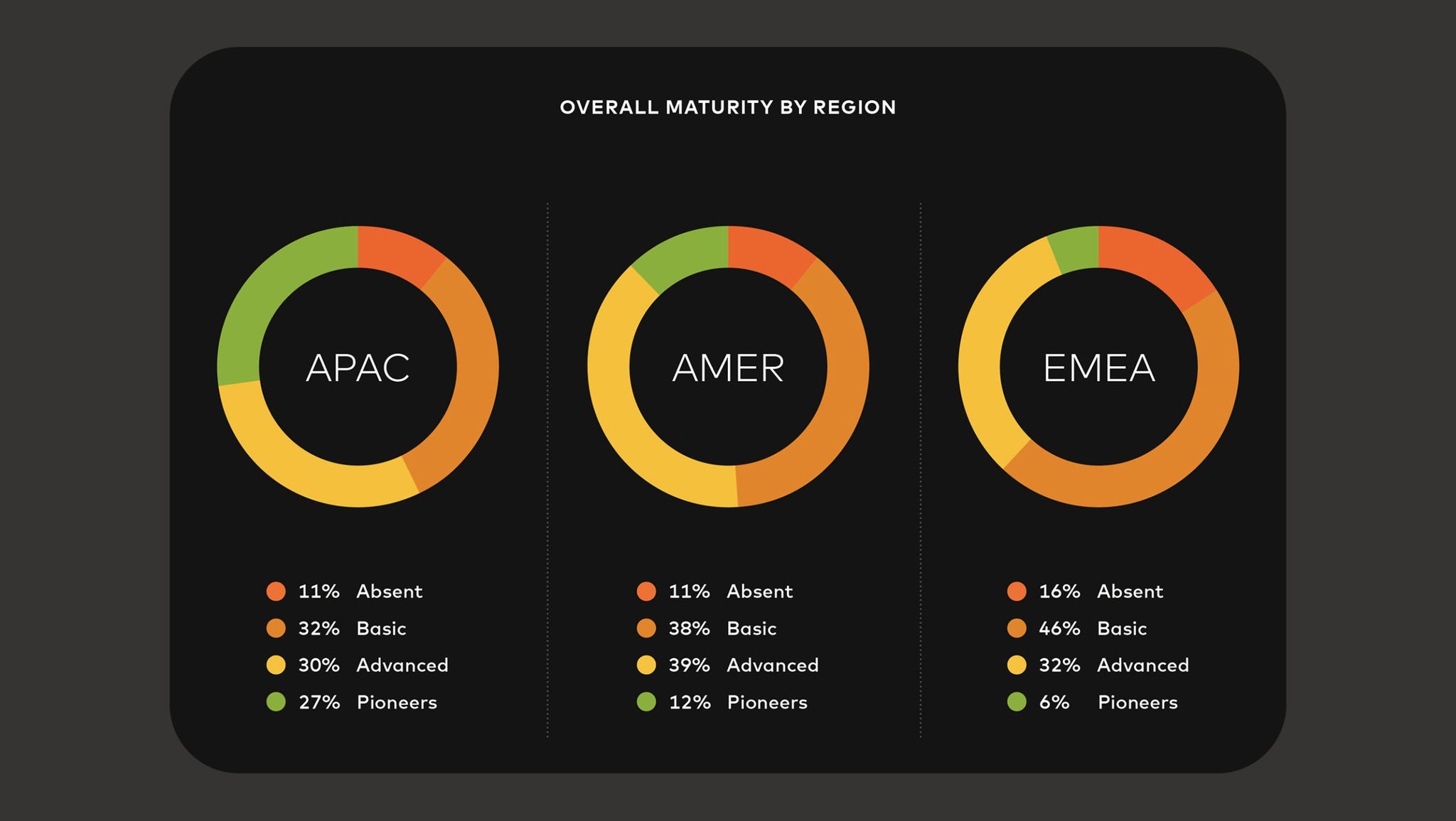
Most have taken the first critical steps to meet customers where they’re at. 67% of global e-commerce brands, for instance, consider personalization a top priority and plan to invest more in it. Overall, the market came back advanced in its level of maturity when scored across culture, resources, processes and effectiveness, consistent with previous years.
But is it enough to keep up?
Zooming in, brands have significantly bolstered their processes to efficiently bring contextually relevant digital interactions to life. But the right processes are not enough to scale personalization execution and impact across an organization. One key signal is still holding them back: Resources (such as dedicated staffing and teams).
Here’s more on the key areas of opportunity we believe will help make a better case for continued personalization investment this year:
Culture: Tying metrics back to personalization value remains elusive for some
To unlock scale, teams must be able to measure and communicate the value of personalization — yet four in 10 brands lack clear key performance indicators (KPIs) to assess their efforts. It’s important to link campaign metrics to larger business goals, which they can do through smaller scale tests that prove impact and open doors to greater investment.
Resources: Momentum and scale inhibited by lack of dedicated personalization staffing
Only 50% of brands have established dedicated personalization support, with others relying on ad-hoc resources or going without it completely. These constraints make it difficult to drive personalization efforts across teams and functions required to deliver personalization. Without the proper operational foundations, progress will stall, which can lead to a cycle of disinvestment.
Processes: Organizations are heavily investing in personalization processes to unlock efficiency gains
Companies have doubled down on processes this year, with 65% reporting they derive insights and learnings from test data. Brands are likely motivated by the decrease in overhead that comes with integrating personalization into their marketing and conversion rate optimization (CRO) strategies. But without adequate resourcing to reinforce these strong processes, brands risk missing out on the impact of a fully cohesive program.
Effectiveness: Siloed efforts are reducing the impact of personalization
67% of brands report they lack a singular audience strategy for approaching ideation, execution and analysis. Those brands may optimize processes only within one function or team (email marketing, for example). This leads to siloed, channel-specific efforts that have limited effectiveness when compared to cross-functional, multi-channel personalization based on an aligned, fixed audience strategy.