

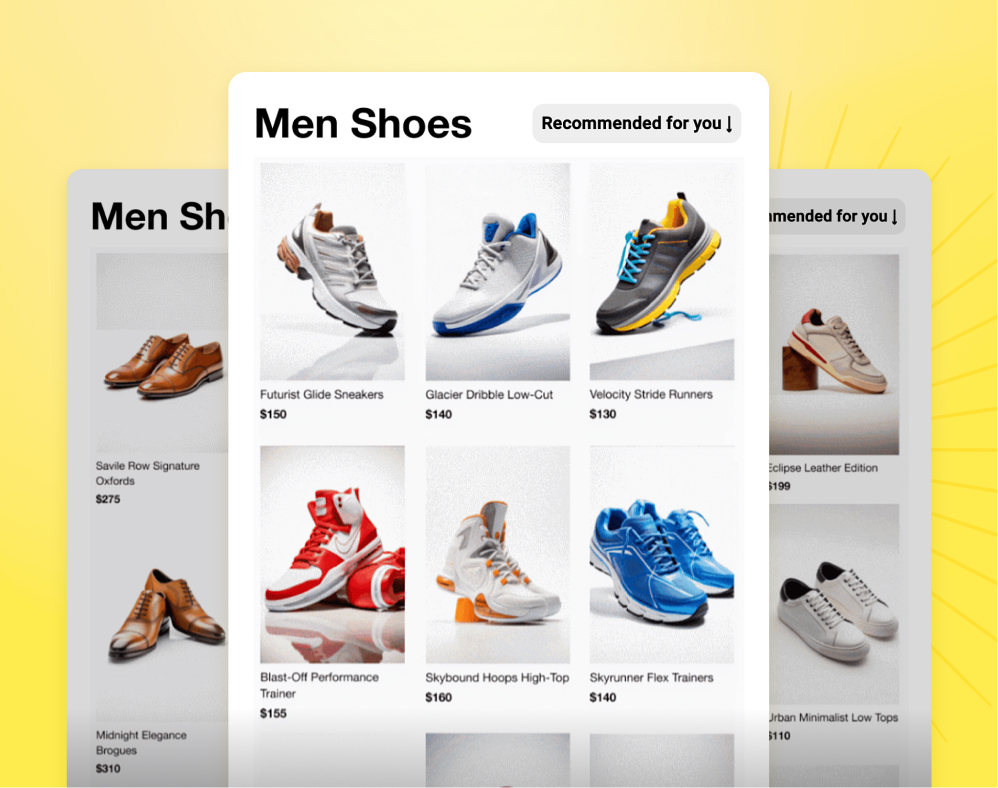
These category pages can also be sorted and optimized using sophisticated, deep learning algorithms to surface the most relevant products for each user according to their preferences and predict what they might be most interested in next. Different algorithms and merchandising rules can also be targeted to different pages and audiences to determine the best possible combination for maximum engagement.
2. AI-powered assistants for purpose-driven consumers
Purpose-driven consumers know what they want and are ultimately seeking guidance. For instance, they might know they need clothes for the gym but have yet to narrow in on specific products.
Personalization and AI can now help retailers understand the intent behind colloquial, question-based search queries. When paired with advanced semantic search, which can interpret the meaning behind a query (not just the words), the experience gets even better. A great example of this in action: generative AI-powered conversational experiences like Shopping Muse. Whether a shopper searches for “running jacket for winter” or “What should I wear jogging in cold weather?”, these AI chatbots use natural language processing and deep learning models to answer direct questions, recommending the most relevant products every time. And by analyzing contextual and behavioral data, the chatbot is better suited to anticipate what the consumer might need next.
In our experience, retailers have found that shoppers are more inclined to buy and have higher cart values than those who do not engage with tools like this. It can also be an easy way for consumers who are shopping for someone else, or simply lack product knowledge, to find the perfect gift.
3. Advanced semantic search and visual analysis for product-driven consumers
These are high-intent shoppers who are trying to navigate directly to a particular item, like “high-top basketball shoes.” With such a specific query, we might assume traditional search methods are enough. But advanced search capabilities enable consumers to filter through the noise of large product catalogs and reach those shoes in an instant. Drawing from user history, affinity and contextual clues, personalized search can surface high-top basketball shoes with the colors and features they prefer.
Personalized autocomplete can also drive shoppers to related products they wouldn’t have discovered navigating through category and product listing pages.
Through visual analysis tools, physical attributes of items in a brand’s product catalog can now be recognized, eliminating the need for third-party catalog enrichment and enabling retailers to surface the right products quicker. For instance, even if an item is not tagged “striped trousers,” AI can “see” the stripes in the image and know to include it in the relevant search results.
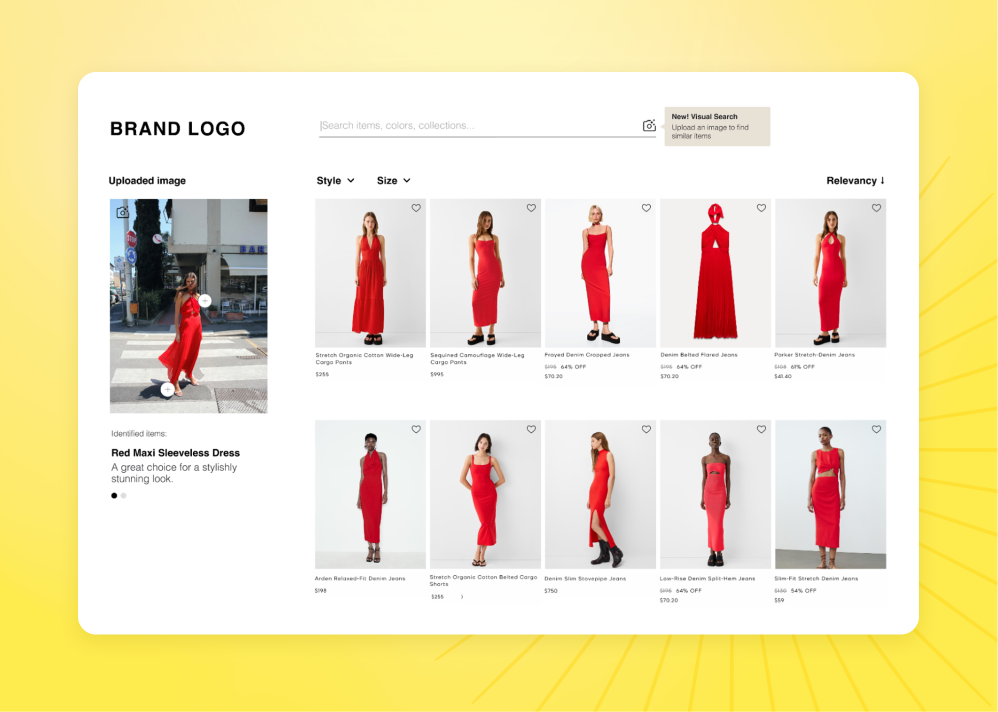
Further, consumers who spot something they like — for instance, a stylish pair of sneakers in a window while out running errands — can upload a photo and instantly be matched with lookalike products from the retailer’s catalog. Even when a certain item in the catalog is out of stock, visual search can return the next most relevant item.