Innovation

January 22, 2026


McLaren Racing’s Zak Brown: Why F1 podium glory starts by putting people first

McLaren’s CEO shares his insights into rebuilding a team, leading through pressure, and finding the tiny margins that change everything.

google logo

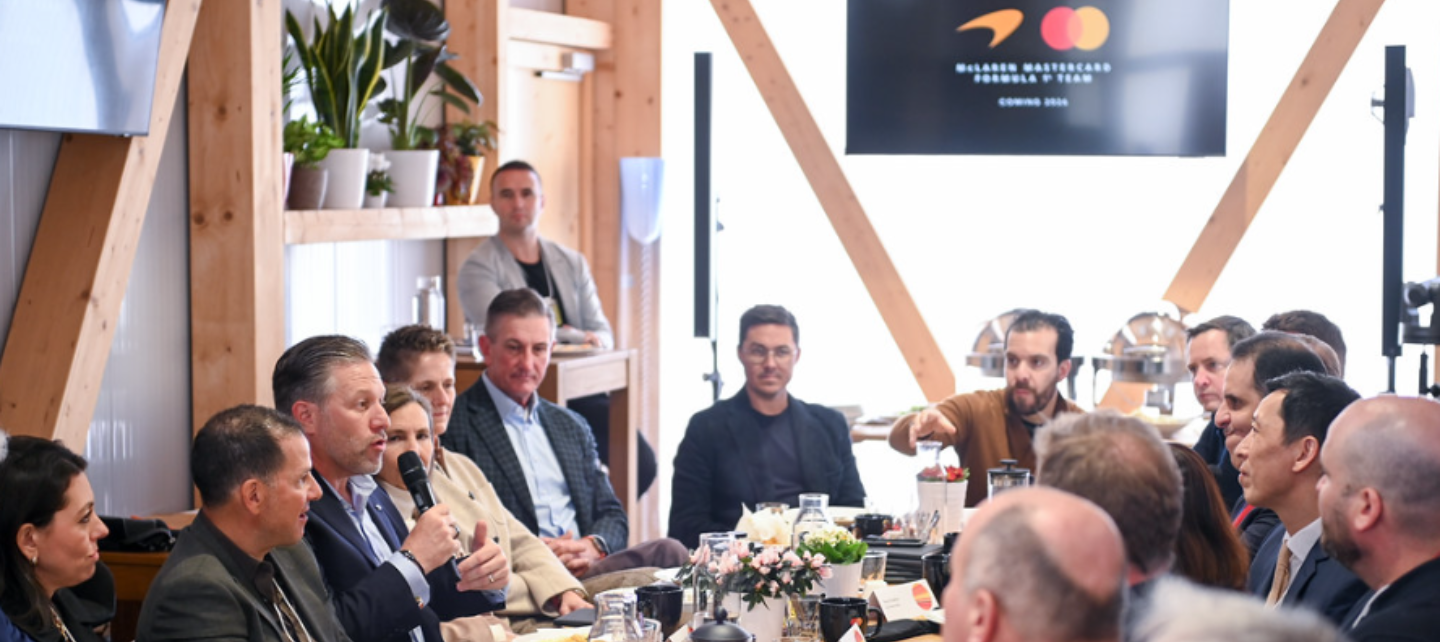
McLaren Racing CEO Zak Brown, left with microphone, discusses how to build a winning organization with Mastercard executives Linda Kirkpatrick, far left, and Ling Hai, second from right, and other Davos attendees.

Sophie Hares

Contributor

When Zak Brown took the wheel as CEO at McLaren Racing in 2018, the Formula 1 team had waited over two demoralizing decades for the chance to lift motorsport’s coveted silver and gold Constructors’ Championship trophy.

Since then, Brown’s people-centred leadership has dramatically transformed McLaren’s fortunes with the team celebrating back-to-back world championships in 2024 and 2025.

But it’s been a long ride to the top for the former professional race car driver and motorsports marketer who got his start age 13 when he won the Wheel of Fortune game show and spent his prize money on a Go-Kart.

Brown’s new “Seven Tenths of a Second” memoir tracks McLaren’s resurgence and how he transformed its 1,400-strong staff into a winning team.

“We tackle problems, we don't tackle people,” Brown says in an interview with the Mastercard Newsroom at the World Economic Forum annual meeting in Davos Tuesday. “It’s the ultimate teamwork.”

At Davos, Brown joined a session on leadership and innovation in a time of rapid change  with Mastercard’s Ling Hai and Linda Kirkpatrick. The company became the team’s official naming partner last year. In the interview, Brown shared his thoughts on what it takes to maximize potential and build world champions. The interview has been condensed and edited for clarity. 


The title of your book refers to the tiny margins that make all the difference. What’s your advice for leaders searching for those incremental gains?

Brown: A lot goes into those incremental gains. You need the right people on the team before you even start playing the game. Then it's about everyone understanding their role and the importance of their role. The racing driver is the most famous, but the racing driver can't do it without [the contribution of] 1,400 people.

For example, great fans come from a great marketing and communications team. Lots of fans help your commercial team bring in partners who help fund great technology, drivers and people.

It’s about getting an organization to understand that … you wouldn't be here if you weren't a critically important part of winning races. Once people feel that level of engagement and involvement, everyone just tries harder.


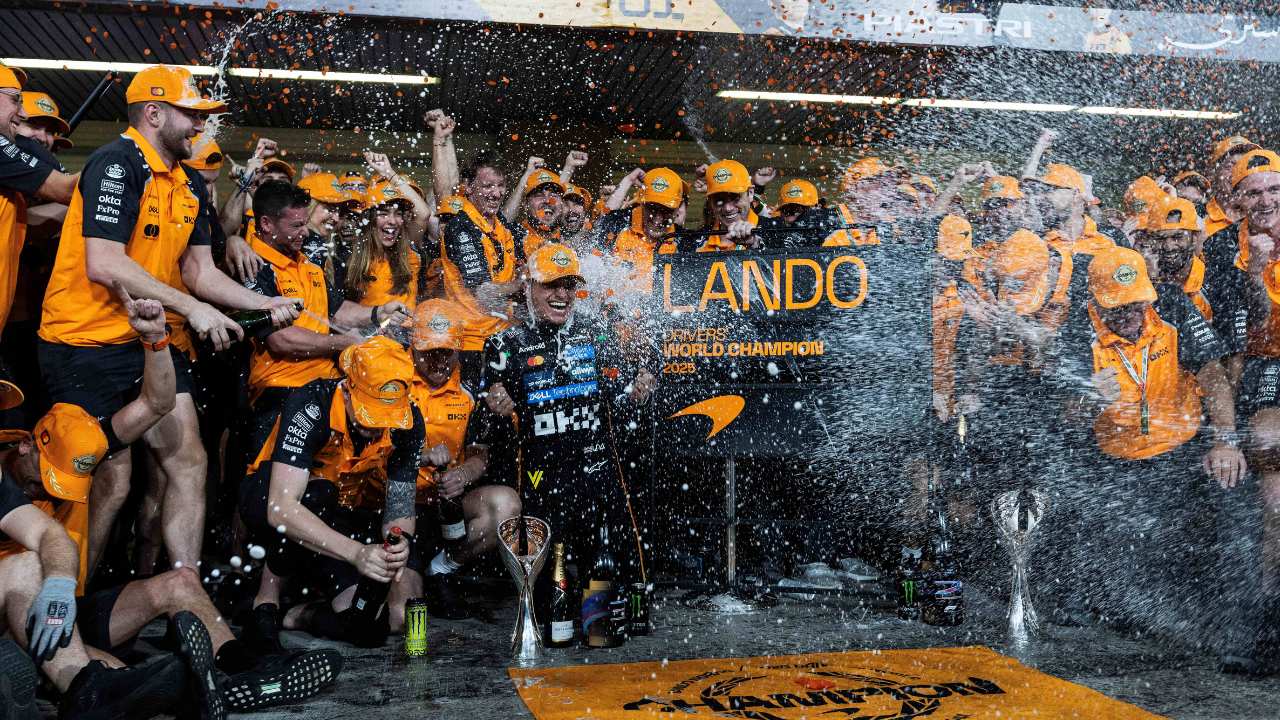
The McLaren Racing team celebrating Lando Norris's driver championship win by spraying Champagne in 2025.

The McLaren Racing team celebrates driver Lando Norris' 2025 Formula 1 World Drivers' Championship with sprays of Champagne. (Photo courtesy of McLaren Racing)


What’s your advice to younger executives?

Brown: When I started my business, I was young, so there was a lot I didn't know. There’s still a lot I don’t know. So, my advice is to get experienced and knowledgeable people around you so you can learn from them. Be very inquisitive and then lean in.

Mistakes are going to happen … when the fire happens, run towards the fire. I think in business, also with younger executives, they don't really understand what hard work looks like and how much failure you have in business every day. You try and not have big failures, catastrophic failures. But every day, you can do a little better than you did yesterday. Don’t underestimate the competition or how hard it is to be world champions of business.


Would the younger Zak have taken your advice onboard?

Brown: I've always been very inquisitive. I've always recognized that there's someone that knows something more than me on any particular topic. I've always had a thirst for feedback, and that comes from being a racing driver ... From a very young age, I've been used to talking about what challenges are and trying to address them, as opposed to run from them.


What leadership skills will be most important over the next decade?

Brown: People, people, people, we’re obsessed with people. You can have all the great technology and racing drivers, but if you don't put a great race car on the track, you will not be successful. And what puts a good race car on the track is a great organization.

I'm just a manager. I'm not designing anything. I'm not driving anything. So, my job is to make sure we recruit, retain and grow our talent and create a work environment and a set of KPIs that is highly motivating, and then kind of lead by example.

I'm an impatient person, and you do want to have a little bit of an impatient organization. It kind of keeps everyone up on their toes.


People, people, people, we’re obsessed with people. You can have all the great technology and racing drivers, but if you don't put a great race car on the track, you will not be successful. And what puts a good race car on the track is a great organization. 

Zak Brown


You’ve been at the forefront of modernizing F1 sponsorship. What's the difference between sticking on a logo and developing commercial partnerships that move business forward?

Brown: Without hundreds of millions of McLaren fans, there is no McLaren. So our consumer brands are helping us be more engaged with our fans and bringing new fans to the table.

The world used to be about awareness. Now it's about engagement. So if the partnerships aren't authentic and aren't engaging, it's nothing more than a sticker on a car. The more our partners feel part of our racing team, the greater longevity, the more engagement you have.


F1 is booming in popularity in the United States. How do you see it growing?

Brown: When Liberty [Media Corporation] acquired Formula 1, a real concern for the growth of the sport in North America was attracting women, youth and diversity. These categories I just mentioned now account for 75% of new fans coming into the sport. We've gone — to use a racing phrase — from zero to 200 because now Formula 1 is a big deal in America. I'm almost shocked at how big and popular it became, what seems to be overnight. The product's great, drivers are awesome and Netflix played a huge role. We've pulled back the curtain, and people have gone, ‘It’s a really cool sport!’ 


What you miss most from being behind the wheel?

Brown: The competition, the speed, the adrenaline. You get a lot of adrenaline in the race on pit wall. I get a lot of adrenaline out of business and partnership. So everything is a competition, but nothing happens quite as fast as on the racetracks. I just miss a steering wheel in my hand.

Fueling the competitive spirit

Sports are bringing people together, building vibrant communities and inspiring new connections and capabilities.
Runners at the Priceless Start at the NYC Marathon