February 17, 2026
The aromatic lychee orchards of northern India, the mustard fields that flow through Rajasthan like golden rivers, and the vast sunflower farms in Karnataka all have one thing in common. Actually, billions: bees.
Insect pollination services, where beekeepers rent out their hives to farmers, contribute $22.5 billion to the Indian agricultural economy annually. But despite powering greater crop yields, biodiversity and climate resilience, the beekeeping sector remains an underseen and underserved sector, far from reaching its full potential.
A few years ago, Monika Shukla, a former banking technologist turned social entrepreneur, was working with rural communities across India on market-driven, sustainable solutions that could improve livelihoods, particularly for women. She and her team met hundreds of small-scale beekeepers in more than a dozen states and realized that beekeeping, if supported by scientific training, fair markets and better tools and tech, could become an even more powerful driver of income, crop productivity, biodiversity and climate resilience in rural and tribal areas. In fact, Prime Minister Narendra Modi in 2020 launched what he calls a “sweet revolution,” a mission to promote and develop scientific beekeeping and quality honey and beehive products.
“It’s about looking at a system in its entirety and fixing the infrastructure, so that effort actually compounds into livelihoods, income stability and anti-fragility,” Shukla says. Beekeeping has low barriers to entry and doesn’t require a lot of land, so it’s often introduced as a livelihood opportunity for women, small landholders and landless farmers, but, she says, support often drops after the initial training.
So, in 2023, she founded Buzzworthy Ventures (also known as the Humble Bee), equipping thousands of small-scale beekeepers with scientific training, guaranteed buy-back and market access, and better equipment to improve hive management and honey quality and strengthen crop pollination. That includes the introduction of BeeKind, a mobile platform that uses AI-powered insights and predictive analysis to offer guidance on hive health and productivity, a pollination calendar, climate resilience advice and more.
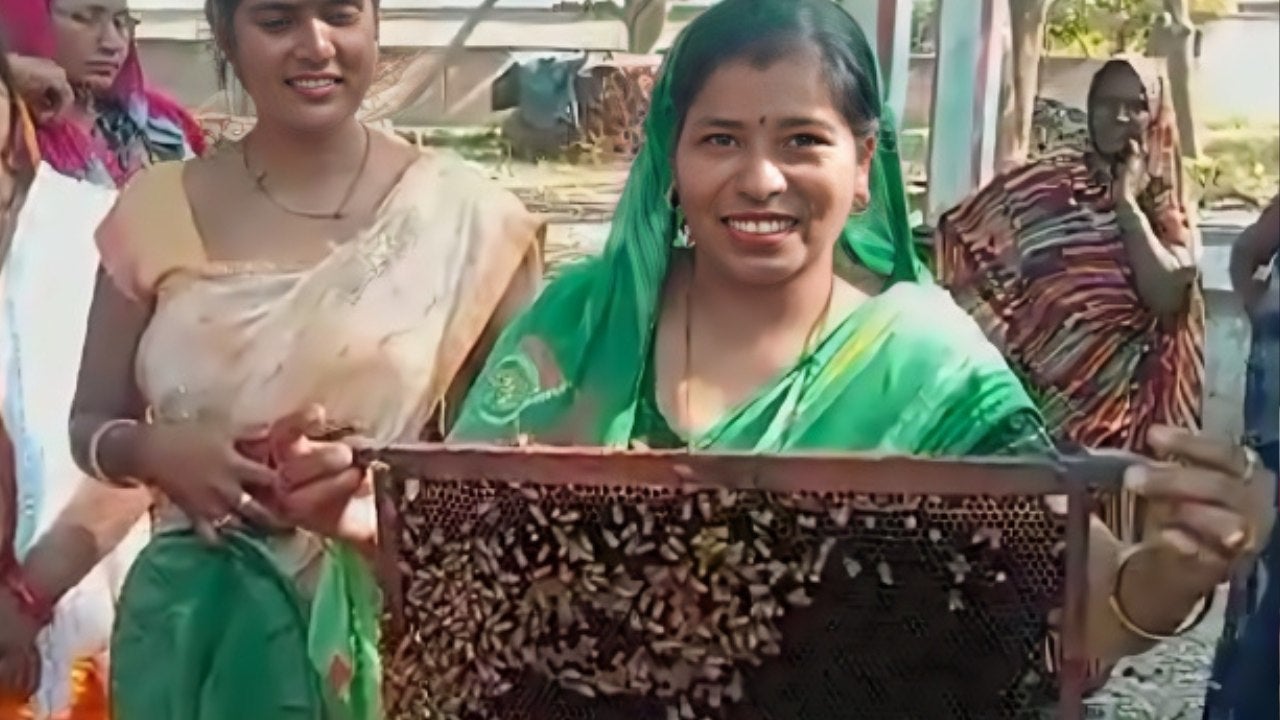
A beekeeper shows off a frame, the removable part of a hive that helps bees build comb. for storing honey and pollen. (Photo courtesy of Buzzworthy Ventures)
It was developed with insights from the rural beekeeping communities to avoid the “false confidence” created by solutions designed without that level of input, Shukla says. “If literacy, language or gender dynamics aren’t included in the design, the very people the solution claims to help stop using it.”
For example, one of the biggest challenges the team identified was that beekeepers, particularly women, don’t have the time, skills or access to smartphones to be able to use apps reliably. The solution wasn’t more features, but more people.
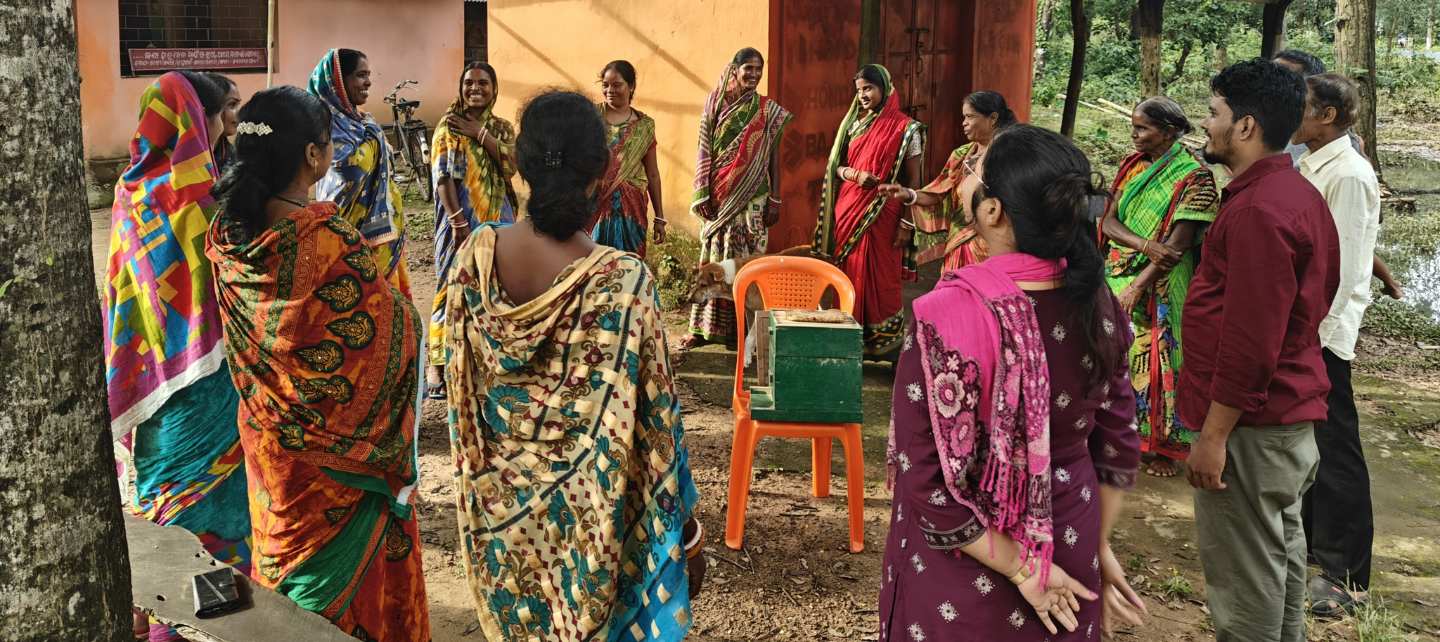
The initiative supports clusters of beekeepers with a BeeMitra, a trained on-ground facilitator who often comes from the same community and helps beekeepers with diagnostics, yield-tracking, hive health tracking, migration management and more. The team created FieldView, a mirror application of BeeKind, for the BeeMitras and field facilitators to use on behalf of the beekeepers, allowing them constant access to BeeKind support without having to learn all the functionalities or own a smartphone. The app data is captured passively via images, calls, voice inputs and site visits. The AI-generated insights are then communicated via short voice-based alerts in local languages.
“We are building participation into the system itself,” Shukla says of this “human in the loop” model of AI. “Field coordinators and lead women beekeepers regularly flag when AI recommendations don’t match field conditions, and that feedback feeds directly into model refinement.”
That philosophy has not gone unnoticed. Buzzworthy Ventures became one of five winners of the Artificial Intelligence to Accelerate Inclusion (AI2AI) Challenge, launched in 2024 by Mastercard Center for Inclusive Growth and data.org to recognize AI solutions that advance inclusion and economic empowerment. “When AI learns from people, it has the potential to amplify impact and scalability many times over,” says Uyi Stewart, the vice president for Inclusive Innovation & Analytics at the Center.
Humble Bee will be using its prize money to evolve the in-app chatbot into an agentic system with memory, context and routing that can offer support in eight different local languages. It has also introduced an image bot that offers hive health insights based on the images that beekeepers upload.
“Scaling for us doesn’t mean removing humans from the loop,” Shukla says. “It means using AI to amplify field knowledge, not replace it.”
BeeKind has helped deploy 6,000 hives across eight ecological zones, generating employment for about 1,800 women beekeepers, a number that continues to grow.
In the future, the Humble Bee team is planning to introduce a pollination-as-a-service module to bridge the gap between farmers seeking pollination services and the beekeepers. They’re also working toward digitizing income cycles for the beekeepers by adding honey passbooks to the app, which creates a digital transaction history that can help them get better access to credit and insurance. Shukla also expects to add features such as dynamic migration data and deeper climate risk signals, and come up with a gender-adaptive climate resilience fund to support the beekeepers.
“One lesson we have learned is that AI adoption in rural contexts is less about algorithms and more about relationships,” she says. “When communities feel seen and heard in the design, technology becomes a tool they trust — not something they tolerate. That’s the lens through which we continue to build BeeKind.”