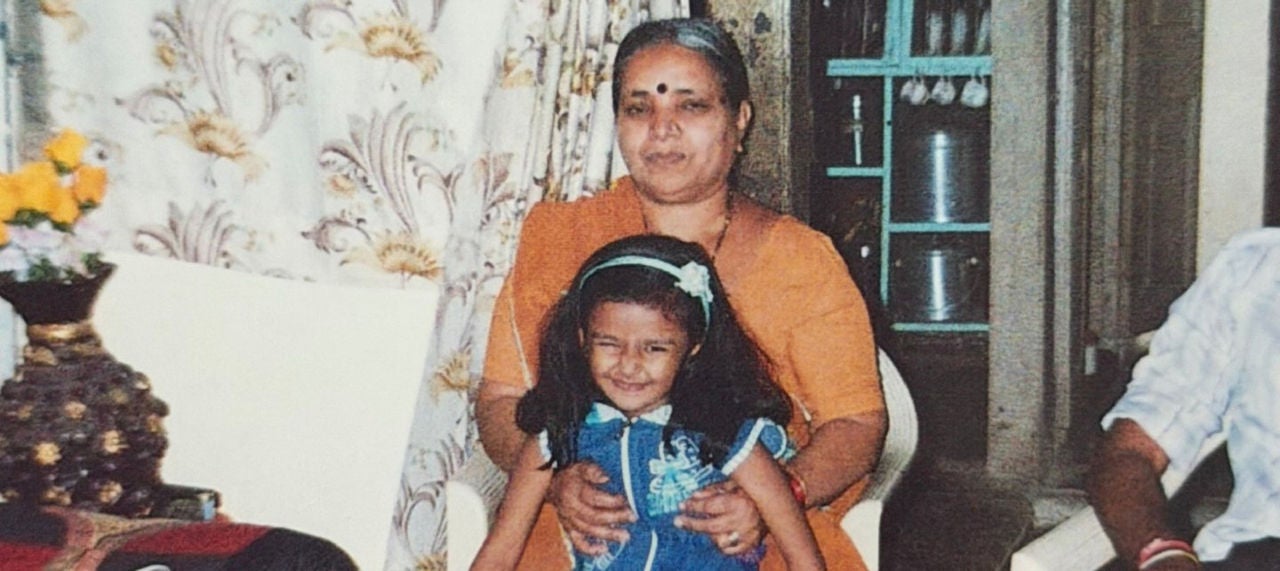
Mishwa Bhavsar’s grandmother once shared a bit of advice: “Helping others brings happiness,” she told her young granddaughter. “If you ever feel sad, just go out there and do a small thing for someone else.”
Ever since, these words have shaped how Bhavsar processes her emotions and builds community for herself and others.
Bhavsar grew up in India, surrounded by a tight-knit community where supporting others was simply part of life. Her grandmother, who was deeply involved in social work, and her father both embodied that giving spirit. Their home was always filled with visiting family, friends sharing meals and neighbors helping one another. “The house I grew up in was never empty,” Bhavsar says. “There was constant stability.”
Bustling at the center of everything was Bhavsar’s grandmother. But when the gregarious woman was diagnosed with Alzheimer’s and had to move into a nursing home, she struggled deeply with loneliness. “My grandmother was someone who was extremely social, always hosting people and helping them in any way possible,” Bhavsar says.
Seeing her lose that community was heartbreaking for her granddaughter. And in many ways, familiar.
At 15, Bhavsar and her family immigrated to the U.S., first to Montana, and then Michigan and finally California, leaving behind the strong community where everyone knew one another. “After we moved, I had no one except my parents and my sister,” she says. “I wanted to find a community for myself, a sense of belonging.”
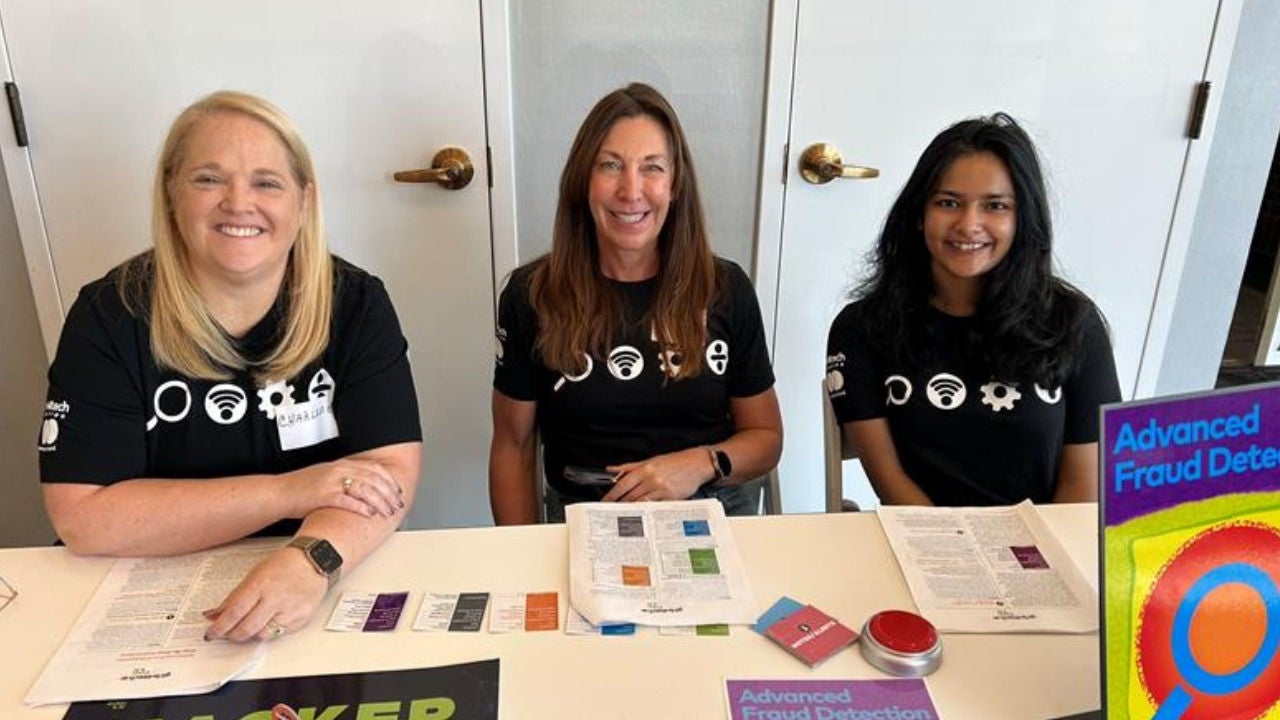
A mandatory five-hour volunteer assignment for a high school class led her to a small nonprofit down the street. What began as an obligation quickly became a lifeline and rekindled her passion for volunteering. That commitment continued throughout college and into her time as a software engineer at Mastercard’s St. Louis Tech Hub, where her efforts recently won her one of Mastercard’s highest volunteer honors, the CEO Force for Good Best of the Best award. “It gives me a sense of belonging,” she explains.
When her grandmother passed away in August 2024, Bhavsar decided to channel her grief into a specific purpose. “I realized there are huge gaps for the elderly population living in nursing homes, and I wanted to do something about it,” she says.
She founded Cura Community to bridge those gaps by connecting medical students seeking hands-on experience with long-term care facilities whose residents need companionship, conversation and connection. And it’s not just an emotional need: Social isolation is associated with an increased risk of dementia. In one 2024 study, researchers found that cognitive decline was least severe among nursing home residents who regularly engaged in social activities.
To prepare, Bhavsar took courses in digital health equity and on using AI for societal benefit at Georgia Tech. She also reconnected with a former classmate now studying medicine. And with fiscal sponsorship from Players Philanthropy Fund and guidance from colleagues across Mastercard (including past CEO Force for Good Winners who had launched nonprofits of their own), her vision began to take shape.
“Reaching out to people and asking for help has been really important for me,” she says. “Without their direction, their help or their experiences, I don’t think I would be here.”
This year, Cura Community piloted its first placement, pairing a medical student with two nursing homes in Bloomington, Indiana, where she went to university. The results were meaningful: Residents gained companionship and connection, while the student gained confidence and communication skills and learned how to navigate a challenging care environment. “It took him time to adjust to the emotional weight of being in a nursing home, but it helped him understand whether this work could define his medical career,” Bhavsar says. “That early exposure was extremely helpful for him.”
Cura Community is still young, but Bhavsar is thinking big. In the coming years, she hopes to expand to additional nursing homes in nearby cities, building a scalable model that strengthens communities while preparing future clinicians.