Our People

December 10, 2025


Building financial sustainability — and creating beauty — in a São Paulo favela

A group of Mastercard volunteers lent their expertise and sweat equity to a Brazilian nonprofit, revamping public spaces and strengthening its financial footing.

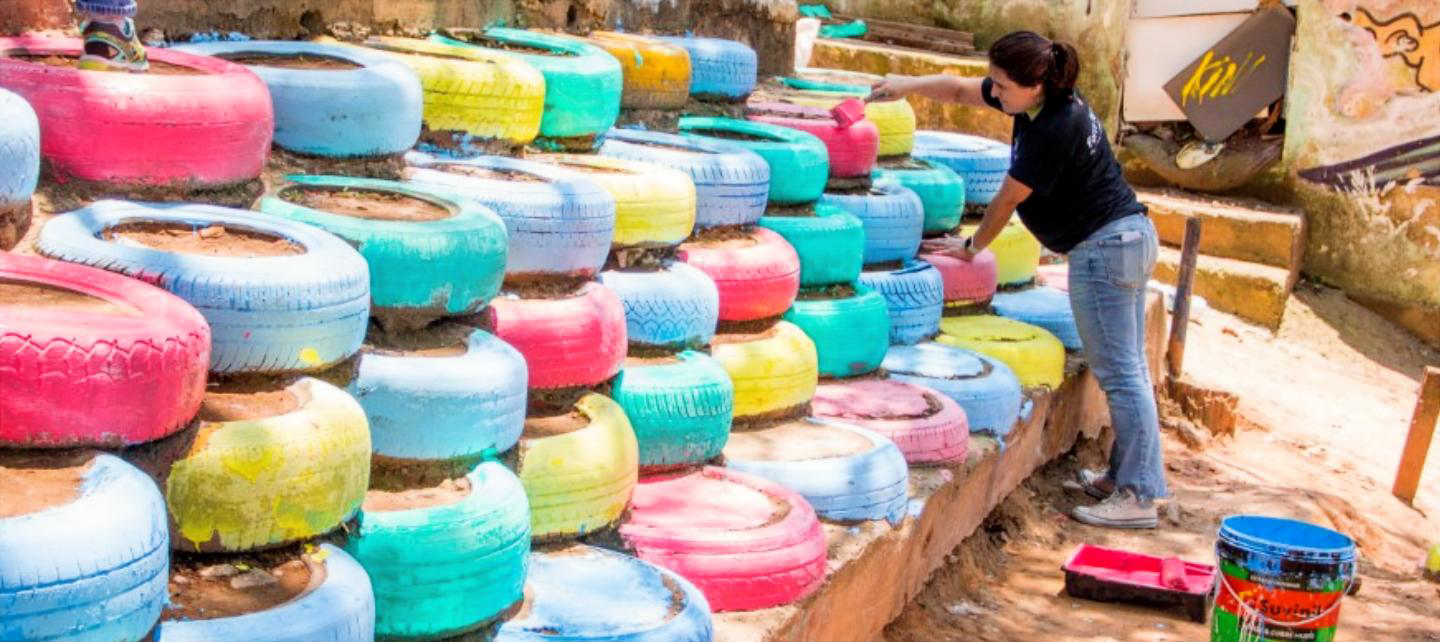
Rita Krejici paints tires stacked as a retaining wall .

In the community-built park in the Jardim Colombo favela, Mastercard employee Rita Krejici repaints tires that are used as structural supports in the hillside neighborhood. (Photo credit: André Del Casalle)

Megan DeMatteo

Contributor

Deep in São Paulo’s hillsides, a stair-step terrace of old tires has become a rainbow, stripes of pink, turquoise and lemon yellow zigzagging along a tucked-away patch of land. What was once an abandoned farm turned landfill is now a vivid reminder of what neighbors and volunteers can build when resources are scarce but determination is plentiful.

Beneath that splash of color is a deliberate plan designed to ensure that the labor that installed it culminates in more than just a cosmetic improvement. Like many nonprofits, Instituto Fazendinhando, the grassroots organization behind the community beautification project, faces the persistent, unglamorous challenge of sustaining its mission once volunteers disband and the photo-op-worthy efforts are over. Too often, the nonprofits putting in the most work grapple with irregular donations, grants tied to narrow requirements and funding cycles outside their control, all amid ongoing pressure to demonstrate impact while covering everyday costs.

Recurring revenue is considered the gold standard in nonprofit development for that reason. It provides predictable income and breathing room to plan ahead, two necessary factors when scaling an organization’s mission. But designing payment systems, pricing structures, donor pipelines and long-range financial models requires time and expertise that many small NGOs simply don’t have.


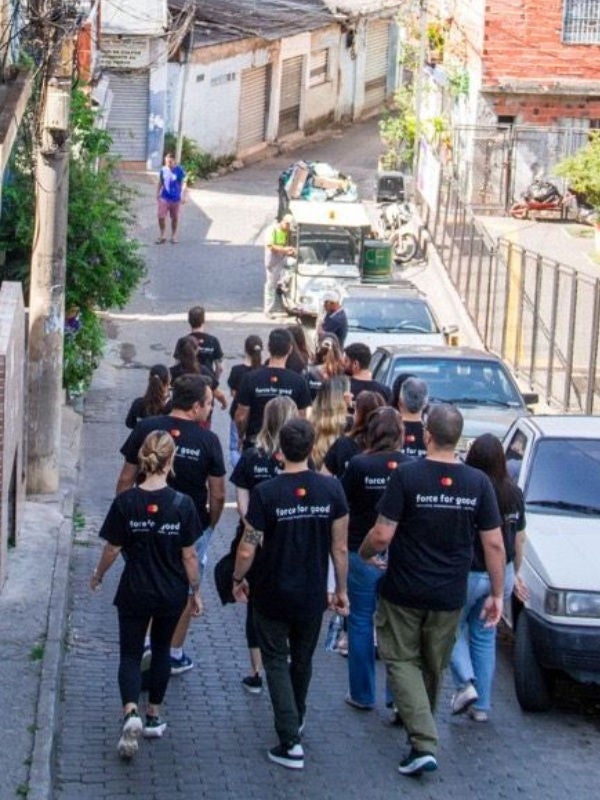
The team of Mastercard volunteers in Force for Good T-shirts walk down a street in the favela.
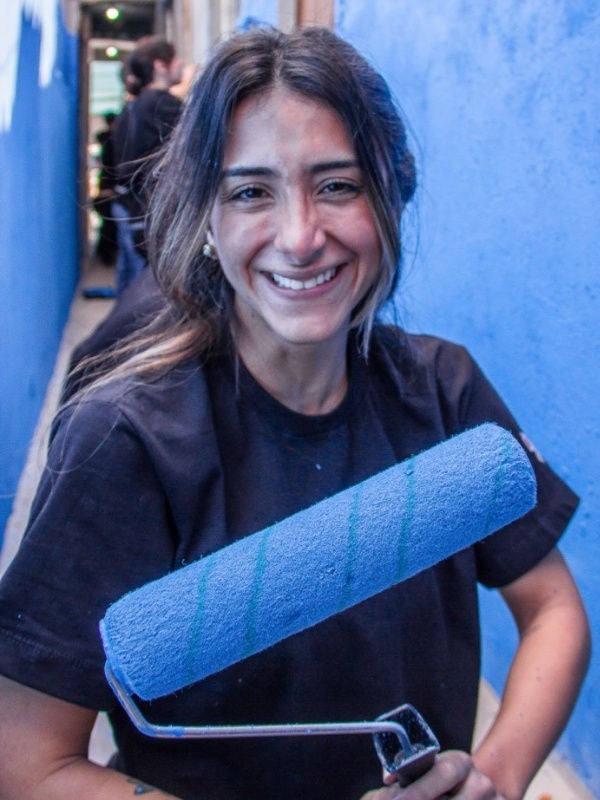
Beatriz Mello holds a paint roller in front of a house face she is painting.

Close to five dozen Mastercard employees across three departments joined forces to revitalize the favela, not only physically but financially by consulting for an impactful NGO, left photo. On right, intiative leader Beatriz Mello enlivens the community's alleyways with bright coats of paint. (Photo credit: André Del Casalle) 


Recognizing that gap, a team of Mastercard volunteers in São Paulo devised a plan to strengthen a local nonprofit’s financial footing and, in doing so, its ability to serve a neighborhood that relies on it. Over the past year, the Mastercard employees partnered with Instituto Fazendinhando to help it fulfill its mission of revamping public spaces and improving unsafe housing conditions in Jardim Colombo, a neighborhood a mile and a half from the corporate office.

What began as a strategic consulting project evolved into six months of work involving 55 volunteers across three Mastercard departments, more than 250 hours of consulting and 200 hours spent in the community, shoulder to shoulder with residents.


Strengthening a community organization with deep local roots

Jardim Colombo is part of the Paraisópolis Complex, a cluster of four unplanned, impoverished neighborhoods called favelas in São Paulo’s West Zone that together span roughly 250 acres and sit beside higher-income districts experiencing rapid development. The Jardim Colombo neighborhood itself is home to about 18,000 residents on 37 acres on the grounds of a former farm.

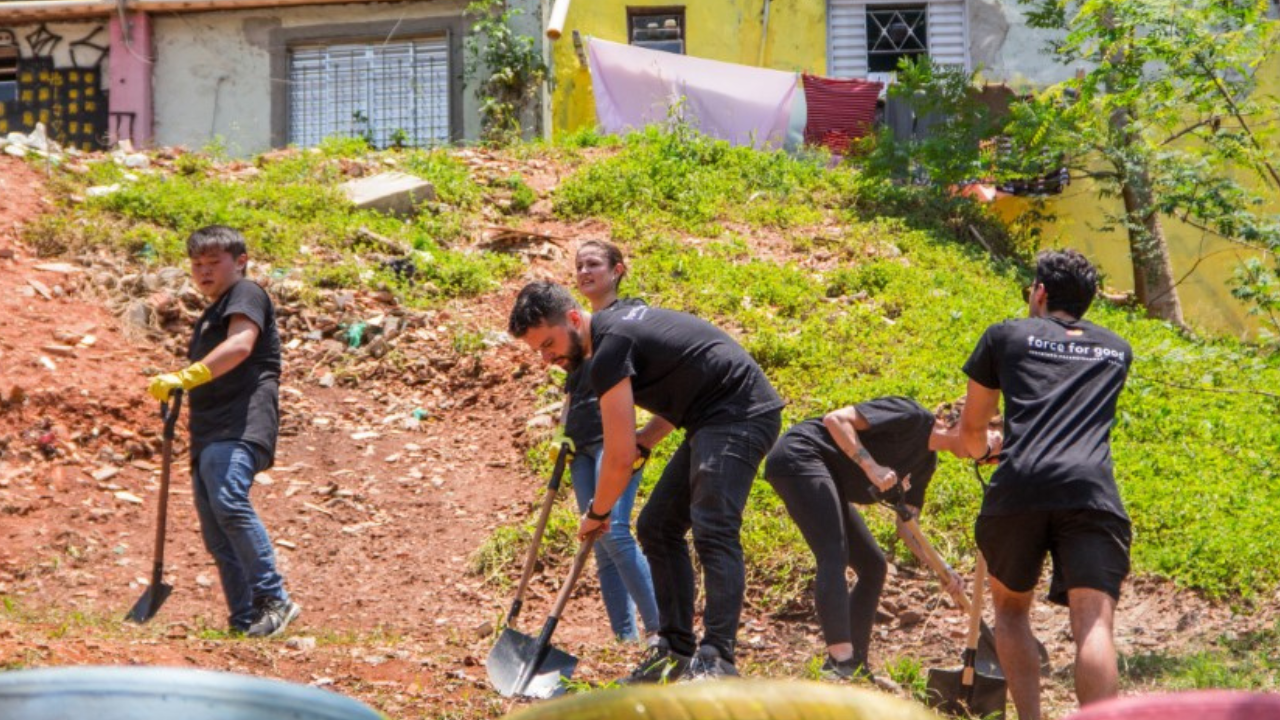
For years, the community had no public square or park, only an informal dumping site that turned into a public health concern. A few years ago, residents organized with local partners to clear the area and turn it into Parque Fazendinha, a community-built park named for the land’s former “little farm.” That effort later expanded into housing repairs, public space improvements and programs supporting women heads of household during the pandemic.


Mastercard volunteers dig up a hillside in a Sao Paulo favela.

Parque Fazendinha, meaning "little farm," had previously been a dumping site, but local residents organized to clean it up, which spurred other improvements in the neighborhood. Here, Mastercard volunteers continue those efforts. (Photo credit: André Del Casalle)


Residents who had already been mobilizing the neighborhood for nearly a decade formally created Instituto Fazendinhando in 2021. One of its co-founders, architect and activist Ester Carro, has become one of the most visible leaders in São Paulo’s favela urbanism movement. In 2023, Carro was named to the Forbes Under 30 Brasil list in the design category for her work with the institute.


Matching community expertise with corporate skills

In 2021, Mastercard Advisors Vice President and Principal Jônathas Albuquerque began looking for opportunities for members of the São Paulo office to give back to the surrounding community. To garner buy-in from his employees, he knew he had to look for a partner that would make use of the team’s business expertise as the company’s consulting arm that helps clients sharpen strategy and operations.

“I wanted to find volunteer initiatives that would leverage what we do best, and what we do best is growing businesses,” Albuquerque says. “I believe that is more impactful long-term than painting or renovating just one building.”

Instituto Fazendinhando stood out, says Beatriz Mello, an associate consultant who led the initiative, because of its “very solid work with infrastructure and social architecture” in Jardin Colombo.

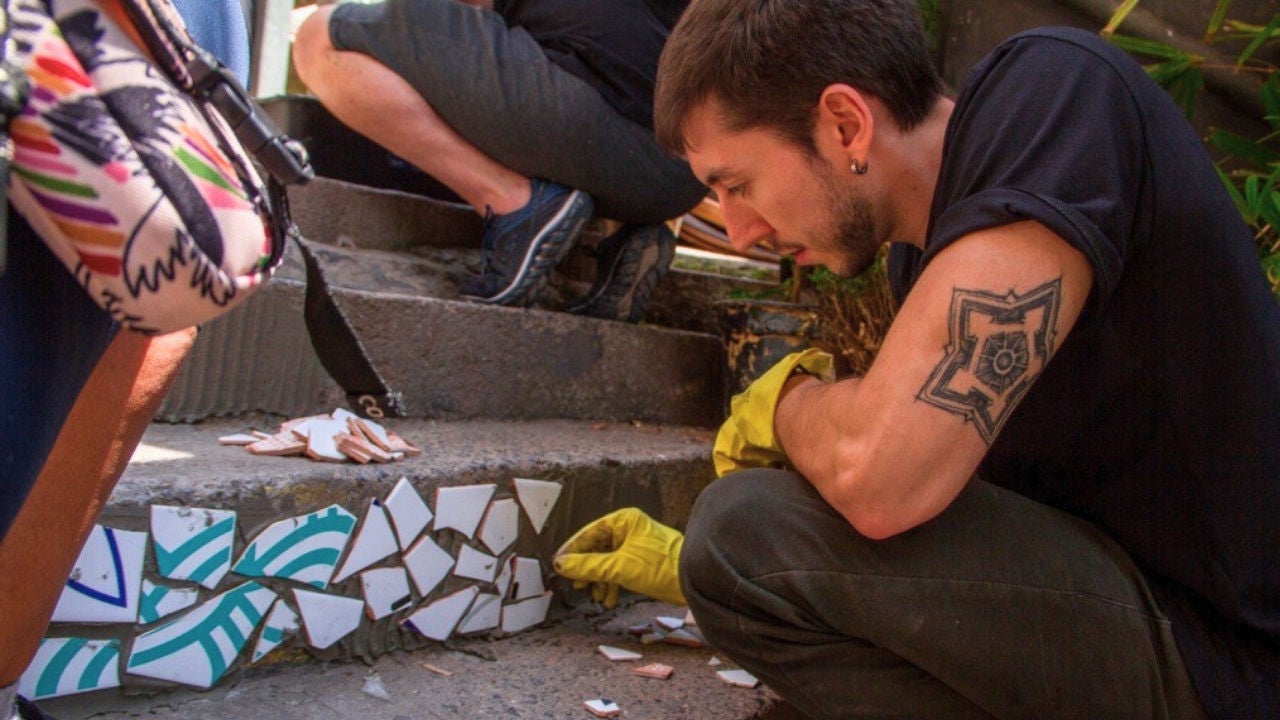
Over the course of the project, the team’s work did end up involving some hands-on jobs in addition to consulting. In one effort, volunteers from Brazil’s Mastercard Advisors, Digital Labs and Corporate Security teams helped repaint the Fazendinha, which uses recycled tires as a structure support technique, cleared debris from the site and installed mosaic tiles on a heavily-used staircase. In another, the team painted the walls and facades of homes along the community’s alleys, bringing color and joy to local residents. 


 João Moretti applies broken bits of tile to steps.

Volunteer João Moretti applies broken bits of ceramic tile to steps in the park. (Photo credit: André Del Casalle)


But then, on the consulting side, the team focused on building capacity for the kind of financial stability most nonprofits struggle to secure. Mastercard Advisors worked with Instituto Fazendinhando’s leaders to develop a recurring-donations framework, a five-year growth plan and a cost model the organization could use with future partners. They also built a commercial pitch and other materials that, according to the team, have already borne fruit. 


What the work made possible

Instituto Fazendinhando put the consulting materials to work almost immediately. Mello says one of the founders has already used the commercial pitch, which helped the organization secure donations from two major companies in São Paulo.

Albuquerque adds that their support helped resolve questions about operational capacity that had been stalling the institute’s growth. “They were very confused about how they could expand,” he says. “Should they go to other communities, or should they focus on this community? We provided them with a plan and said, ‘This is how you can grow.’”

And although Jardim Colombo is close to the Mastercard office, many volunteers had never visited the neighborhood. Even longtime São Paulo residents described the experience as a jolt of perspective. “We need to understand the reality around us if we want to have an impact and actually care about people,” Albuquerque says. “It is unfair to design products only from our own experience when we are 1% of the population. We need to know the reality of others to create solutions that fit their lives.”

Mello says the time in the community shifted how she sees her own role: “In a personal way, it was so important for me to break the unconscious bias we all have,” she says, adding that the first time she visited the favela she felt unsettled by the glaring sight of wealth disparity.

“It shocks you because you see a lot of poverty,” she says. “But I think my main learning is that … we have to go, we have to do more. And that’s not only in our work, but in our day-to-day life.”

As the project has illuminated, “doing more” can simply mean consistently showing up with helping hands and professional knowledge to places that are primed to receive it. For nonprofits everywhere, that support can matter as much as funding.


Meet Mastercard's top volunteers

This São Paulo team was recently recognized, along with other Mastercard employees around the globe, with the 2025 CEO Force for Good Best of the Best honors for outstanding volunteerism. 

June Muli runs a marathon.