Article

What is open finance? Your essential guide

Published: February 2, 2026

template

If you’ve ever applied for a mortgage, opened a new bank account, or managed business finances, you know the drill: chasing documents, downloading statements, and manually uploading files. It’s slow, frustrating and prone to errors. 

Open finance changes that. 

Now, consumers and businesses can instantly and securely connect their own financial data to the service they love to get personalized, convenient and automated financial experiences in return.  

Although many might be offering open finance enabled services already—whether through budgeting apps, instant payment options, or digital lending platforms—there are so many more opportunities and use cases of open finance that remain untapped.  

So, what exactly is open finance, and how can you benefit?  

Let’s dive in. 

Open finance at a glance

Open finance is the practical foundation for creating smarter, more connected financial services.  

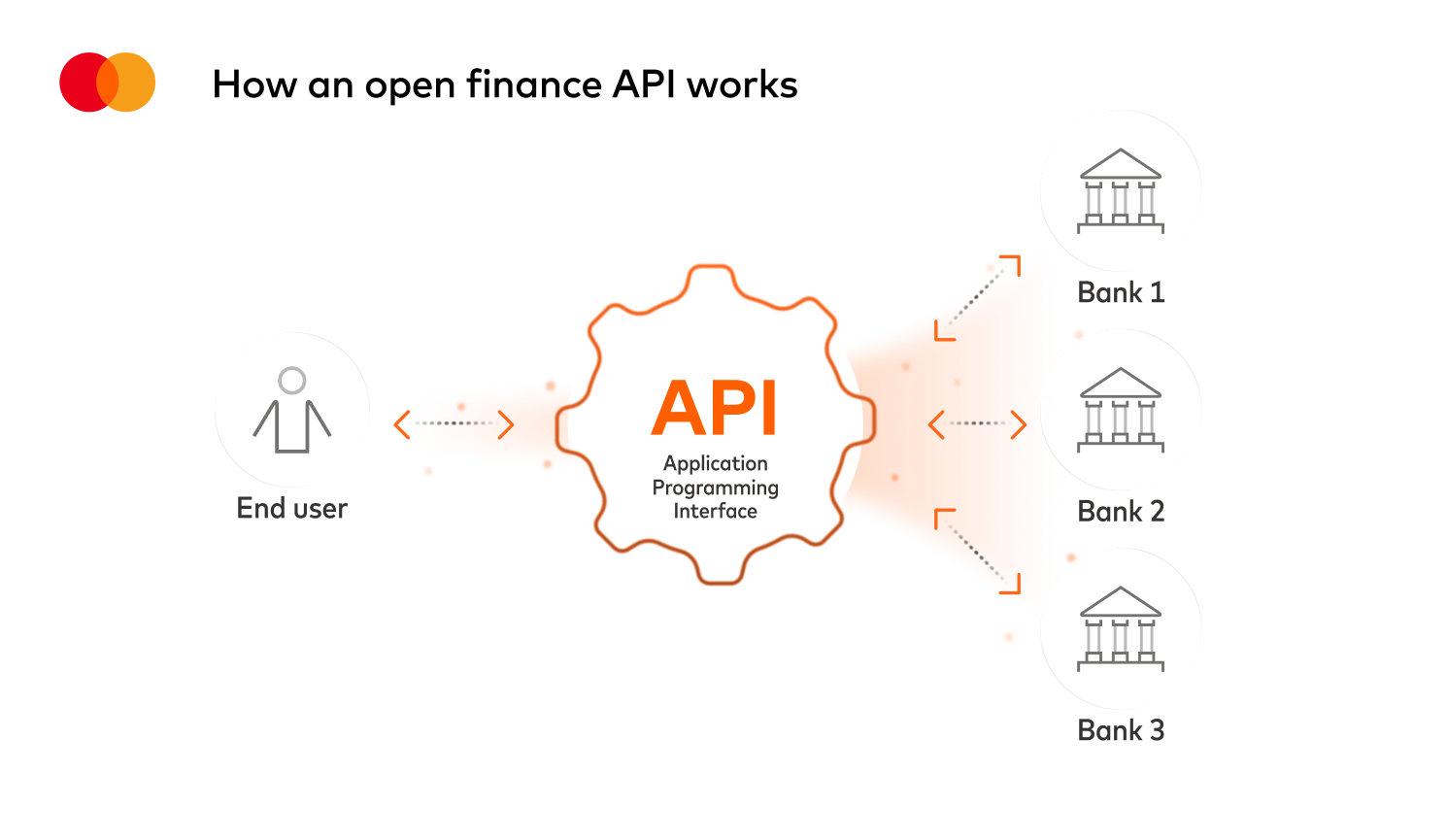
Traditionally, only consumers and their financial institutions could access their financial information. With open finance technology, consumers and businesses remain in control of their own data, who can see and use it, while benefiting from more choice in how they pay, manage money, access credit, invest, and beyond. It allows them to share their financial data with third-party businesses to receive personalized and data-driven financial experiences thanks to open finance APIs.

What is an open finance API?

An open finance API (Application Programming Interface) is the technology that makes this data‑sharing possible. APIs act as secure digital bridges between financial institutions and third‑party providers, enabling real‑time exchange of information.

With APIs, fintechs, banks, and payment service providers can integrate seamlessly, offering customers tailored solutions such as:

  • Smarter budgeting and financial planning tools
  • Faster, more flexible payment options
  • Personalized lending and investment products
  • Streamlined customer onboarding, account opening and verification processes

In short, open finance APIs are the engines powering innovation, collaboration, and customer‑centric financial ecosystems.

Open finance use cases of today and tomorrow

Open finance already drives impact across a wide spectrum—from everyday transactions to complex lending decisions. Some of the most powerful use cases include:

  • Frictionless account-to-account payments: Enable secure and simple account-to-account payments from any platform across financial ecosystems with open finance. 
  • Faster account opening: Streamline onboarding by verifying identities, balances, and ownership through permissioned data, accelerating funding and reducing fraud. 
  • Inclusive lending: Expand access to credit with inclusive scoring models built on consumer-consented data. 
  • Smarter personal finance management (PFM): Deliver smarter budgeting, saving, and investment tools by connecting users to real-time financial insights. 
  • Data-driven small business solutions: Equip SMEs with tailored analytics and cash-flow insights that fuel growth and resilience.

The global market for open finance is gaining strong momentum. By 2030, the global open finance ecosystem is expected to have 1 billion users, according to a 2025 research report by Twimbit. The future trends of open finance extend beyond banking into adjacent industries and everyday experiences that include integrating payments and insurance into non-financial platforms like retail, travel, and healthcare. It also focuses on AI-driven insights and how we can use these to build advanced analytics to further personalize financial recommendations.

Open finance vs. open banking: What’s the difference?

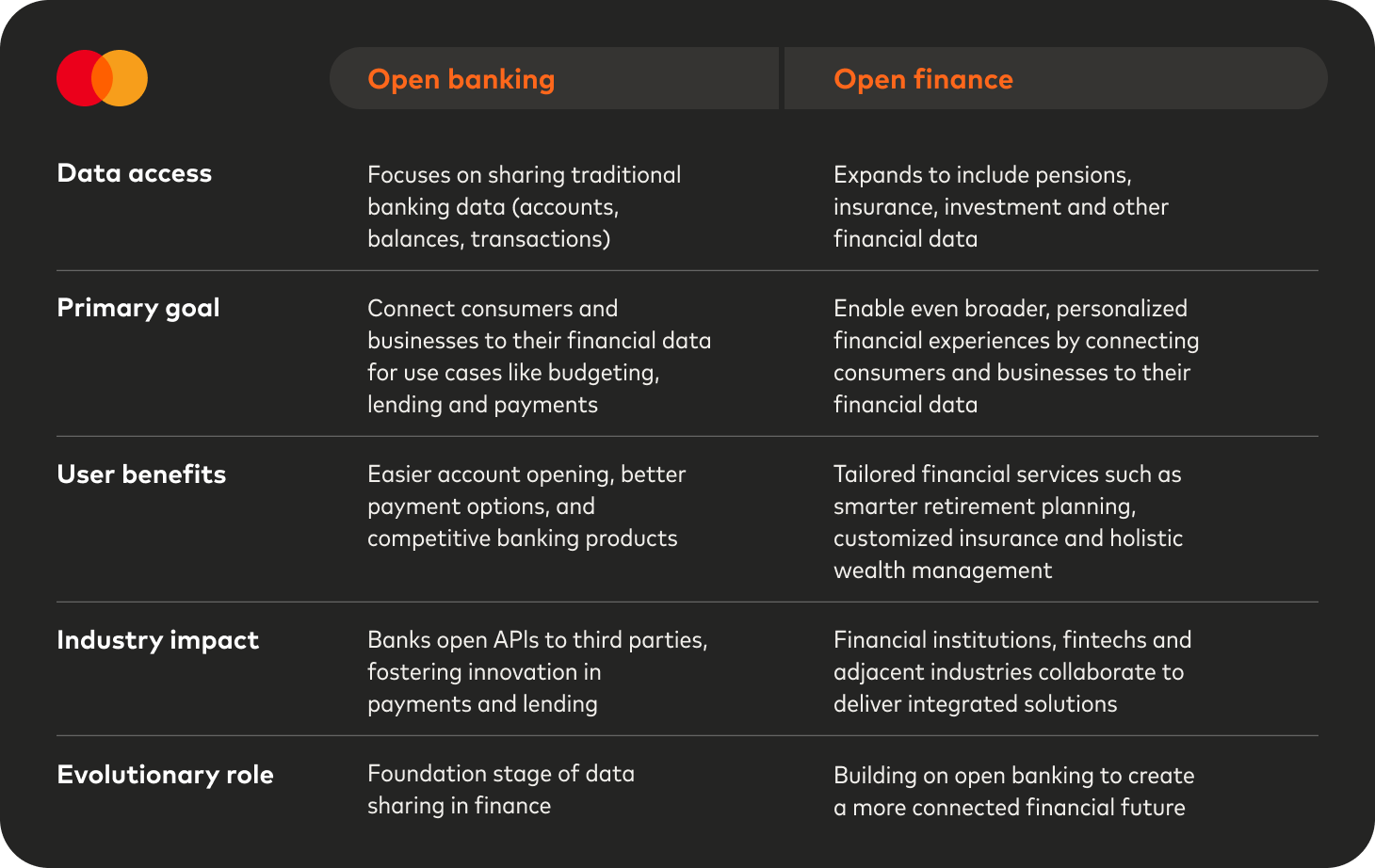
Open finance builds on the foundation of open banking. While open banking focuses on securely sharing traditional banking data—such as account balances and transactions—open finance extends this access to pensions, insurance, investments, and more.

The result is a broader ecosystem where consumers and businesses can benefit from highly personalized financial services, from smarter retirement planning to tailored insurance products. In that way, open finance is the natural evolution of open banking. 

Together, open banking and open finance are reshaping the financial landscape—empowering consumers and businesses with greater control, choice, and convenience.

How open finance differs across the globe

Although open banking and open finance are part of a global movement, they are implemented differently across regions.  

In the UK and Europe, open banking and open finance progress has been largely driven by regulations. New regulations and legislation like the European Union’s Payments Services Directive 3 (PSD3), Payment Services Regulation (PSR) the Financial Data Access regulation (FiDA) and the UK Data Use & Access Act (DUAA) are set to expand consumer rights into open finance and “Smart Data”, thereby strengthening data portability, and encouraging innovation across financial and other sectors.

Please accept functional cookies to watch this video.

poster

In Australia, open banking and open finance are enabled by the Consumer Data Right (CDR), a government-led initiative that mandates secure data sharing across designated sectors of the economy. Starting with banking in 2019, the framework has since expanded to energy and non-bank lending, with the potential for telecommunications and other sectors to be included in the future. The CDR ensures consumers have control over their data, whilst fostering competition and supporting innovation.  

In the United States, the approach has primarily been market-driven with more consumers connecting and using their financial data with third-party apps and services than most other markets combined. While The Consumer Financial Protection Bureau (CFPB) has been working on Dodd-Frank Section 1033 regulations to define consumer data rights for several years, open banking and open finance in the U.S. is not shaped by a single regulatory mandate. Instead, financial institutions, fintechs, and technology providers are leading the way by creating competitive solutions and partnerships. This dynamic environment has fostered rapid innovation, with consumer demand and industry collaboration defining the landscape.  

In Brazil, the Central Bank (Banco Central do Brasil) and the National Monetary Council (CMN) introduced a comprehensive open finance framework in 2021, allowing consumers to authorize the sharing of their financial data across regulated institutions. The legislation is designed to boost competition, reduce information asymmetry, and drive innovation while protecting consumer rights under Brazil’s data‑protection law. It requires standardized APIs, strong governance, and secure, interoperable data sharing. 

six pairs of priced glasses frames

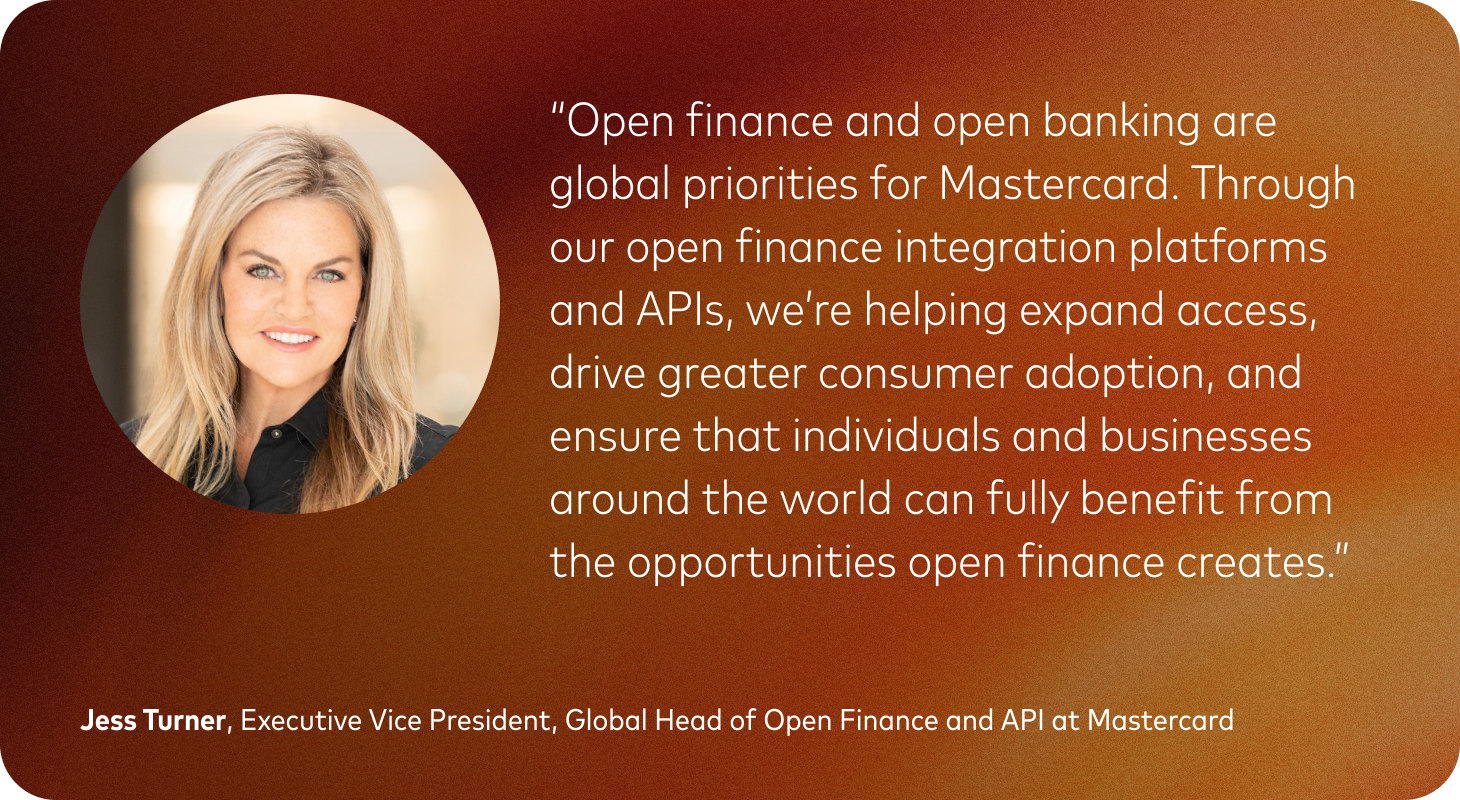
Across the globe, the open finance landscape continues to take shape—shifting at different speeds and in different ways across global markets. Commenting on that, Jess Turner, Executive Vice President, Global Head of Open Finance and API at Mastercard, says: 

“Open finance and open banking are global priorities for Mastercard. Through our open finance integration platforms and APIs, we’re helping expand access, drive greater consumer adoption, and ensure that individuals and businesses around the world can fully benefit from the opportunities open finance creates.” 

How open finance benefits consumers

Open finance is reshaping the way individuals interact with financial services, offering tangible benefits that go far beyond convenience. Here’s some of the ways that open finance benefits consumers: 

Convenience in everyday finance

Open finance simplifies daily financial management by connecting accounts, services, and tools more seamlessly. Instead of juggling multiple apps or logging into different platforms, consumers can view balances, track spending, and make payments. With that, open finance can save time, reduce friction, and make financial tasks—from budgeting to making payments—far more effortless.

Convenience in everyday finance

By allowing secure financial data sharing, open finance enables businesses to tailor products and services to individual, consumer needs. Imagine budgeting apps that automatically adjust to your spending habits, investment platforms that recommend strategies based on your goals, or insurance policies priced according to your actual financial behavior. Consumers benefit from solutions that feel custom-built rather than one-size-fits-all. 

six pairs of priced glasses frames

Inclusive financial experiences

Open finance can also break down barriers for underserved groups. People who may not have traditional credit histories—such as freelancers, gig workers, or those in emerging markets—can use alternative financial data to access loans, insurance, or savings products. This inclusivity ensures that more individuals can participate in the financial system, fostering equity and opportunity. 

Control of financial data

Traditionally, banks and financial institutions were the primary gatekeepers of customer financial data. With open finance and open banking, consumers decide who can access their data and for what purpose. This transparency and control mean people can securely share their financial information with trusted apps or services, unlocking new tools and experiences.

How open finance benefits financial institutions, banks and fintechs

Open finance empowers financial institutions, fintechs, and payment service providers by unlocking new revenue streams, enhancing customer experiences, and driving innovation through secure data-sharing ecosystems.

Open finance benefits for financial institutions and banks

  • Deeper customer understanding: With access to a wider range of permissioned financial data—spanning insurance, pensions, and investments—banks can tailor products and services to individual needs with greater precision. 
  • Streamlined operations: Open finance APIs and interconnected ecosystems reduce dependence on outdated systems, making it easier and faster to roll out new offerings. 
  • Stronger competitive edge: Partnering with fintechs enables banks and financial institutions to stay ahead of shifting customer expectations and maintain their market leadership. 
  • Enhanced risk management: A more complete view of customer financial health supports smartcredit assessments and effective fraud prevention. 
  • Insights for lending and credit: Access, verify, and act on consumer-permissioned financial data across the full lending lifecycle, from application to underwriting to ongoing portfolio management.   

Open finance benefits for fintechs

  • Fueling innovation: By unlocking access to consumer data, open finance empowers fintechs to design specialized solutions—from smart budgeting tools to robo-advisors and embedded finance platforms. 
  • Expanding market reach: Standardized data access allows fintechs to grow across regions and integrate smoothly with banks and payment providers. 
  • Building customer confidence: Consent-driven data sharing ensures transparency, strengthening trust and loyalty among users. 
  • Staying agile: With open finance APIs, fintechs can swiftly respond to market shifts and evolving consumer demands.

Let’s get down to business: Open finance in practice

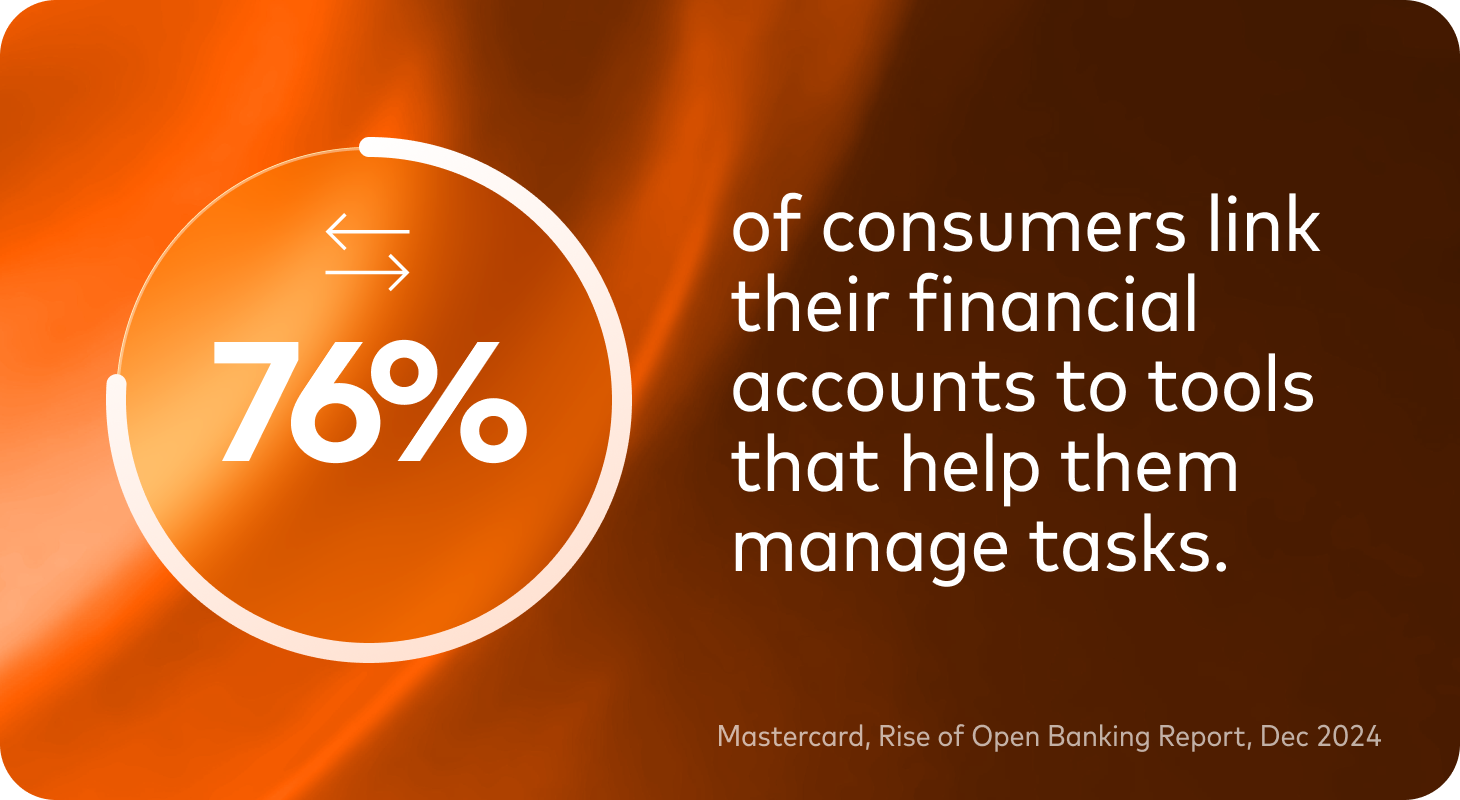
Open finance isn’t just a buzzword. It’s already reshaping how people and businesses interact with money. Adoption is accelerating worldwide: more than 100 million Americans have already allowed third-party access to their financial data in exchange for better services. According to a global Mastercard research study, 76% of consumers link their financial accounts directly to tools that help them manage tasks. 

six pairs of priced glasses frames

In Europe, open finance use cases are wide-ranging, from seamless ecommerce payments to data-driven and inclusive credit scoring models. Consumers benefit from faster checkouts and access to credit, while businesses gain smarter insights into customer needs. See how the Swedish company Avarda boosted its checkout solutions or how Visma Dinero took the hassle out of invoicing open finance.  

In the United States, Mastercard Open Finance powers more than 10,000 services and apps. Experian, for example, uses open finance to help “boost” millions of consumers’ credit scores, while Jet Surety leverages financial data to improve bond vetting accuracy and reduce fraud. 

In Australia, platforms like WeMoney are helping consumers take control of their financial wellbeing by aggregating accounts, tracking spending, and offering personalized insights—all powered by open finance. 

Together, these examples show how open finance is delivering real-world impact: more convenience, greater inclusion, and smarter financial services tailored to everyday needs.

How does Mastercard support open finance?

Mastercard provides a comprehensive open finance ecosystem designed to help financial institutions and fintechs innovate, scale, and stay compliant—all while keeping consumers and businesses at the center of their financial lives. Our support includes:

Open finance APIs

Our suite of open finance APIs enables secure, permissioned access to financial data for use cases such as account verification, payments, lending, and personal finance management. These open finance APIs empower partners to deliver seamless experiences and unlock new revenue streams. 

Open finance consultancy services

Beyond technology, Mastercard offers strategic consultancy to help financial institutions and fintechs design customer-centric experiences and identify growth opportunities. Our experts guide partners through implementation and innovation strategies tailored to their business needs. 

six pairs of priced glasses frames

Developer tools

We provide robust developer resources—including a sandbox environment, detailed documentation, and UX design guides—making integration fast, intuitive, and developer-friendly. 

Data Connect & real-time insights

Mastercard’s open finance platform enables secure data aggregation and real-time notifications, empowering businesses to build smarter, automated workflows and deliver timely, personalized services. 

Embedded open finance solutions

Pre-built toolkits for payments, lending, and account onboarding accelerate time-to-market and reduce complexity for partners, enabling them to focus on innovation rather than infrastructure. 

Compliance & privacy by design

Built with privacy-by-design, Mastercard Open Finance solutions embed consent, data security, and adherence to diverse regulations across the United States, Europe, Australia, and beyond. We combine global scale with rigorous compliance, so partners can innovate confidently.

With more than 60 years of global experience, Mastercard is a trusted partner that understands regulatory and regional differences. We deliver an open finance integration platform that help financial institutions, fintechs, and businesses navigate diverse frameworks, ensuring secure, innovative, and consumer-centric solutions worldwide.

Open finance is here now and changing the way financial services are delivered

Open finance is no longer a distant vision—it’s here, reshaping the financial landscape today. Financial institutions and fintechs that embrace this shift are unlocking new revenue streams, accelerating innovation, and delivering experiences customers expect.  

For consumers, this isn’t just about convenience—it’s about empowerment. Open finance gives people faster payments, more seamless account switching, smart lending, and personalized insights that put them in control of their financial lives.

Please accept functional cookies to watch this video.

poster

Why does that matter? Because trust and simplicity drive adoption. The businesses delivering these experiences will win loyalty, shape behavior, and set the standard for what modern finance looks like.

With Mastercard’s strategic expertise and global open finance reach, you can innovate confidently and create connected experiences that define the future of financial services. 

If you’re curious to explore how open finance can help fuel your services, reach out to one of our experts, or visit our homepage for everything open finance.

Book a demo

Consult our team to learn how Mastercard can enhance your business through our products and services.

Mastercard