Travel
18 May 2026
Today’s international traveller isn’t simply booking a trip — they’re optimising one.
They are planning a trip using AI, chasing favourable exchange rates, going solo and extending business trips into mini holidays, according to the new Mastercard Travel Trendline, a survey of more than 15,000 consumers across U.S., Canada, UK, France, Germany, Mexico, Brazil, China, India, Singapore and Australia by The Harris Poll.
“Travel is no longer simply about where people go, but why they go and what those journeys enable,” says Cheryl Guerin, Mastercard’s executive vice president for Global Brand Strategy and Innovation. “For brands, understanding the new rules of travel in this evolving landscape is essential.”
Here are five trends shaping international travel this year.
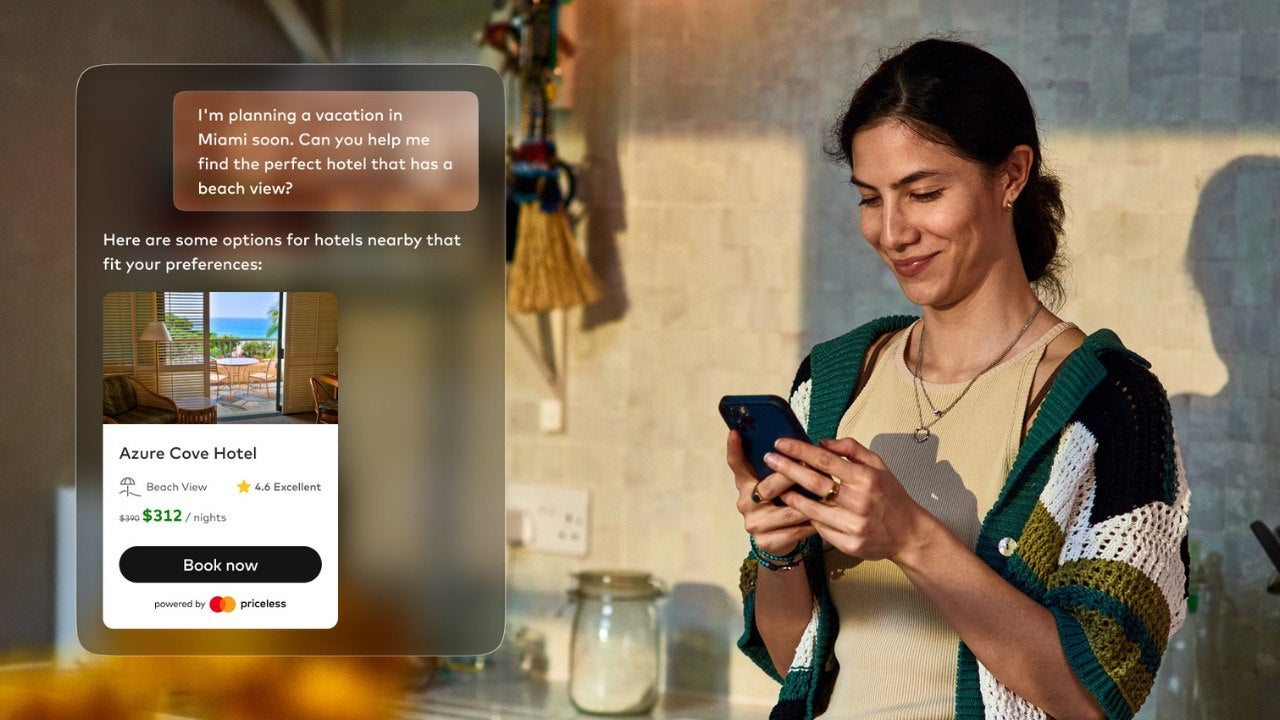
AI has moved well beyond just suggesting itineraries and finding the best flight deals. Today, travellers are getting more comfortable letting AI act on their behalf — 33% of respondents would allow AI to spend up to $1,000 without approval, with that number rising to 41% of solo travellers.
When relying on AI for travel suggestions, 73% of travellers say their top goal is to save money, a sentiment that resonates strongly across every market surveyed, from the U.S. (75%) to Australia (81%) to India (81%).
The bottom line: AI is easing the hassle that comes with travel, handling the budgeting and booking that most don’t enjoy so they can focus on the parts they do.
While travellers used to ask themselves, “How can I afford this trip?” today’s traveller asks, “What can my money do for me?”
The Travel Trendline shows that an overwhelming amount (85%) of international travellers have chosen or would choose, a destination specifically to take advantage of favourable exchange rates. In the Americas alone, 70% of travellers say currency rates actively influence where they go, with that figure reaching 81% in Mexico and Colombia.
And the currencies they’re willing to travel with are evolving too. A separate 2026 Mastercard survey examining global financial sentiment revealed 36% of respondents would use cryptocurrency for travel and accommodations, including 39% open to stablecoins, a sign that the payments landscape of international travel is getting more crowded.
The bottom line: Destination choice has become a financial strategy. The savviest travellers are going where their money goes the furthest.
Travelling alone was once considered a niche pursuit. Now 39% of international travellers have already taken a trip alone, including 20% whose last trip was a solo one. The trend is catching on as 35% say they’d consider it.
But going solo doesn’t mean going out alone. Seven in 10 international leisure travellers are interested in solo experiences designed to connect them with like-minded people — whether through tours, shared accommodations or organised social itineraries. Solo travellers also skew more adventurous: The survey shows 84% express interest in off-the-beaten-path or emerging destinations, compared to 78% of those travelling with others.
The bottom line: Solo travel has evolved from an act of independence into an opportunity to connect with other people on your own terms.
The line between work travel and personal travel has never been blurrier. Eighty-one per cent of business travellers say they have extended an international business trip for non-work purposes, turning a conference or a client meeting into a memorable adventure. The top popular add-ons are wellness activities (25%) and time with family or friends at the destination (25%).
Separately, a growing number of travellers are making health a destination itself. Nearly a quarter (23%) of international leisure travellers have travelled for medical treatments or procedures, while 68% express interest in travelling for wellness services such as anti-ageing therapies, full-body diagnostics or biomarker testing. Medical tourism is no longer a fringe consideration; it’s part of how globally mobile travellers think about their health.
The bottom line: Business trips have become a launch pad for savvy travellers to take advantage of time away from home.
While the youngest generation hasn’t started earning yet, they’re already deciding where the family’s next destination is. In all, 76% of parents of Gen Alpha kids (children born between 2010 and 2024) say their children have significant input on international destination choices, compared to 59% of parents of other generations. Further, 76% of parents say their child’s interests are the primary factor in choosing where to travel. And 85% of Gen Alpha parents acknowledge their child has effective veto power over destinations they deem boring, more than double the rate seen among parents of other generational cohorts (48%).
The bottom line: Hotels, tours and many other companies that speak to Gen Alpha — and to the parents who listen to them — will have a significant edge.
Rising fuel costs and new technologies like AI chatbots have created a new kind of international traveller, one that’s more strategic about how to get the most out of their trips and budget. The travel industry companies that adapt along with these travellers could experience plenty of tailwinds.