

3 min read · 2024

The question every Retailer needs to answer is — are their payments keeping up with digital transformation? Are they making the most of innovative technology, protecting customers from new threats and giving consumers the secure, convenient and fast payment experience they expect?
Credit and debit cards have long topped the list of most common e-commerce payment methods, but consumers are showing a desire for a more diverse range of payment methods and channels. E-wallets look set to become one of the most popular payment methods, with over half the world using them by 2025. With many newer financial institutions embracing evolving technology to challenge more traditional banks, what people want and demand from their payments is changing — and it’s a case of keep up or lose out.
With 90% of people who switch between multiple devices per day using an average of three devices to complete a task, retailers that don’t offer a seamless shopping experience across computers, tablets, phones and more may see abandoned baskets.
The right omnichannel solution can help retailers create a seamless shopping experience across multiple channels — using social media to sell directly, communicate with customers or redirect to their own webstores, while enabling a diverse range of digital payments.
Even stores that are traditionally brick-and-mortar can benefit from changing attitudes to digital, with omnichannel shoppers spending up to 300% more. Though a slight majority prefer shopping in-store over online in the US (33% versus 22%), nearly 33% of them say the benefits of shopping online were worthwhile. Not only does multichannel commerce remove barriers for digital native consumers but, as we saw during the coronavirus pandemic, it helps businesses manage during periods of low footfall.
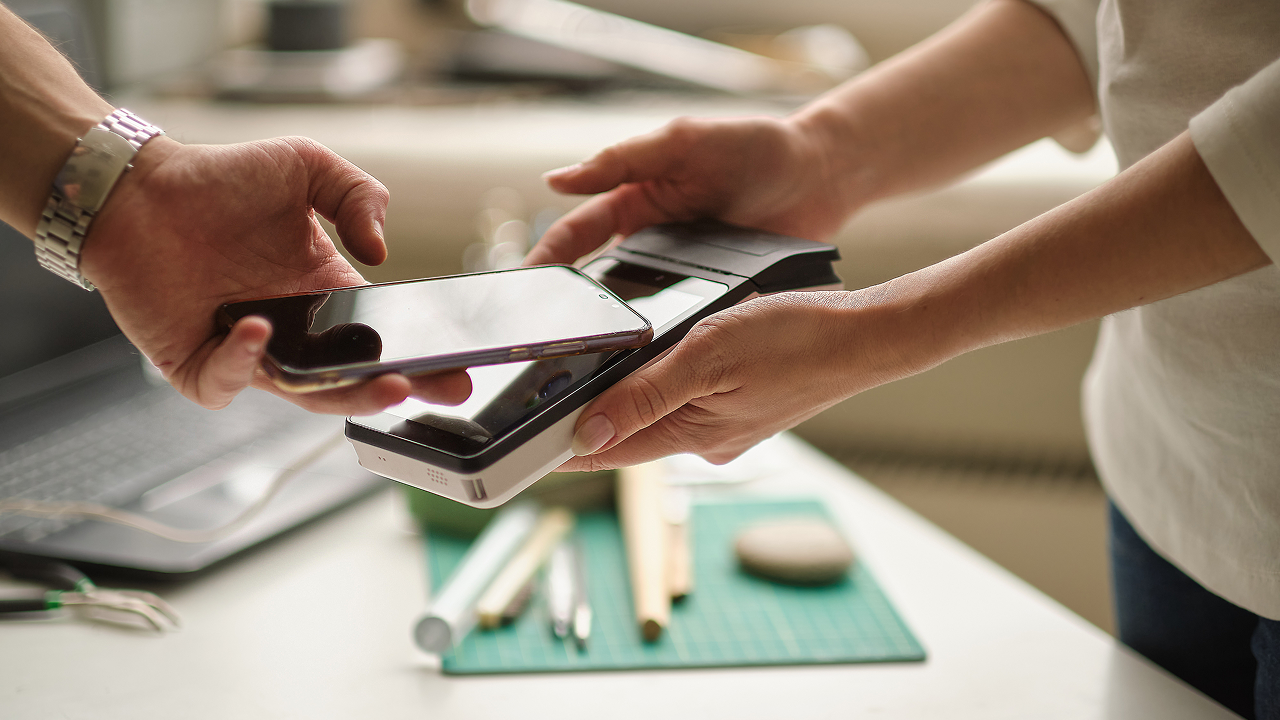
The evolution of near field communication (NFC) has allowed a decline in cash. As smart phone ownership and e-wallet adoption increases, more people want to pay using what they already have on them, freeing them from the need to carry cash or find an ATM. Small retailers may also prefer to take payments via their own device, rather than handling change or investing in expensive and bulky point of sale systems.
Tap on Phone has opened-up contactless payments for a wide range of retailers without turning to third parties — however small they are and whatever and wherever their business. Now they can get mobile point of sale (mPOS) from their existing banking relationship, with cutting-edge encryption techniques like tokenisation. This means customer details are protected for the consumers and hidden from the retailers, transferring responsibility for data protection to their trusted banks.
Benefits extend beyond taking payments though. An mPOS solution allows traditionally cash-only businesses like tradespeople or mobile sales to access digital conveniences like e-invoicing, receipts by email, inventory management and reporting. For other businesses, like the burgeoning micro businesses or small to medium-sized enterprises (SMEs), it can be part of a package of new consumer-pleasing options like quick settlement of BOPIS (buy online, pick-up in store).
Regarding BOPIS, like most things digital payments, it saw a massive increase in popularity since the start of COVID-19, with 30% of shoppers trying it for the first time. Since then, 64% said they were choosing BOPIS more often, with 59% interested in BOPIS-type shopping options.
Retailers who don’t offer a BOPIS service were seeing their share of online and off-line sales drop, according to one survey. The competitors of shops that adopted BOPIS saw sales dip 4.7% online and 1.8% off-line. Additionally, with 85% of US consumers buying something else when picking up their items, offering BOPIS may also mean an increase in average transaction value.
Layaway payments are nothing new, but recent financial uncertainty has led to a re-emergence of instalment, AKA buy now pay later/BNPL. Consumers enjoyed the flexibility of spreading larger payments out with 0% interest, with 6% of all e-commerce transactions in 2021 in the UK being BNPL and this is forecast to grow 50.5% in 2022. Thanks to digital transformation, unlike traditional layaway no trips to physical shops are required and it can be offered before, during or even after checkout — retroactively turning a regular transaction into instalment.
Increased consumer satisfaction, reduced basket abandonment and improved loyalty are all benefits for retailers offering instalment payments. The right partner can help retailers as well, such as with receiving regular payments and experiencing a simple integration, reducing friction and reducing risk. With increasing regulation and digital fraud, banks, payment service providers and retailers will want to ensure their instalment programme is kept up to date and secure to meet consumer demand while avoiding unnecessary complications.
Consumers demand convenience, but they’re not willing to sacrifice too much security for it. With the launch of EMV 3Ds 2.0 allowing richer data and smarter solutions, businesses will be better able to provide fast and secure transactions even while on the move and unlock innovations like password-free checkout. But as technology evolves so will consumer expectations. The right payment partner can help retailers and banks provide tomorrow’s solutions today, helping them to stand out from their competitors, maximise conversion and reduce costs.
