Establishing And Managing Your Credit History/Score

Mature woman in glasses using a calculator while holding household bills.

Defining Your Credit Score

Understanding how credit scores and credit reports work can help you achieve your financial goals, such as buying a home, leasing a car, or paying off debt. A good credit score is a powerful and essential tool in your financial future, empowering you with more financial options.

  • Financial institutions will use your credit score to decide if you’re eligible for a loan or a credit card and set your interest rate. 
  • Landlords may use your credit score to determine whether or not to rent a property to you. 
  • In many states, an insurance company may use your credit score to determine insurance coverage and calculate your premium. 
  • Other service providers, like cell phone and utilities companies, may use your credit scores to screen you for payment ability and cost of service. 
  • A potential employer might check your credit to get insight into a potential hire. (Note: they don’t look at your actual credit score, but instead see a modified version of your credit report.) 

Not having a strong credit history or a good credit score can create obstacles for you and end up causing you to pay more money in the price you pay for loans, credit cards, and other services.

mastercard logo

Terminology

Credit

The ability to borrow money, access goods or services with the understanding that you’ll pay later.

Credit Score/Rating

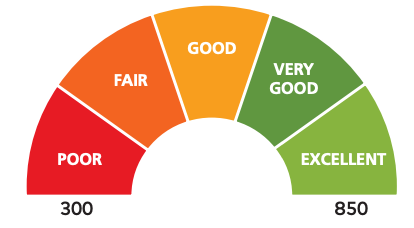
A number ranging from 300-850 that depicts a person’s creditworthiness. Financial institutions and other companies use a Credit Score/Rating to evaluate the probability that an individual will repay loans in a timely manner. 

credit card meter showing credit score numbers from 300 to 850

Credit Report

A record of your debt that includes your history of borrowing and repayments. Compiled by three independent credit bureaus:

  • Experian 
  • TransUnion 
  • Equifax 
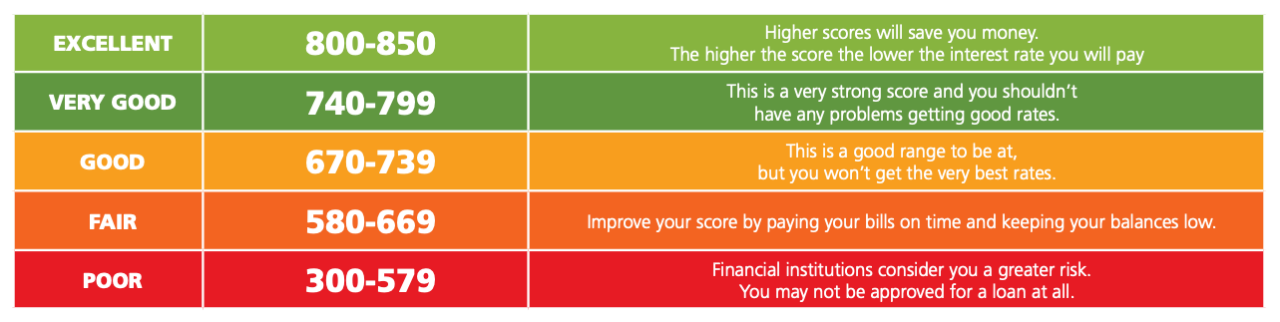
credit score, 800-850 is excellent, 740-799 is very good, 670-739 is good

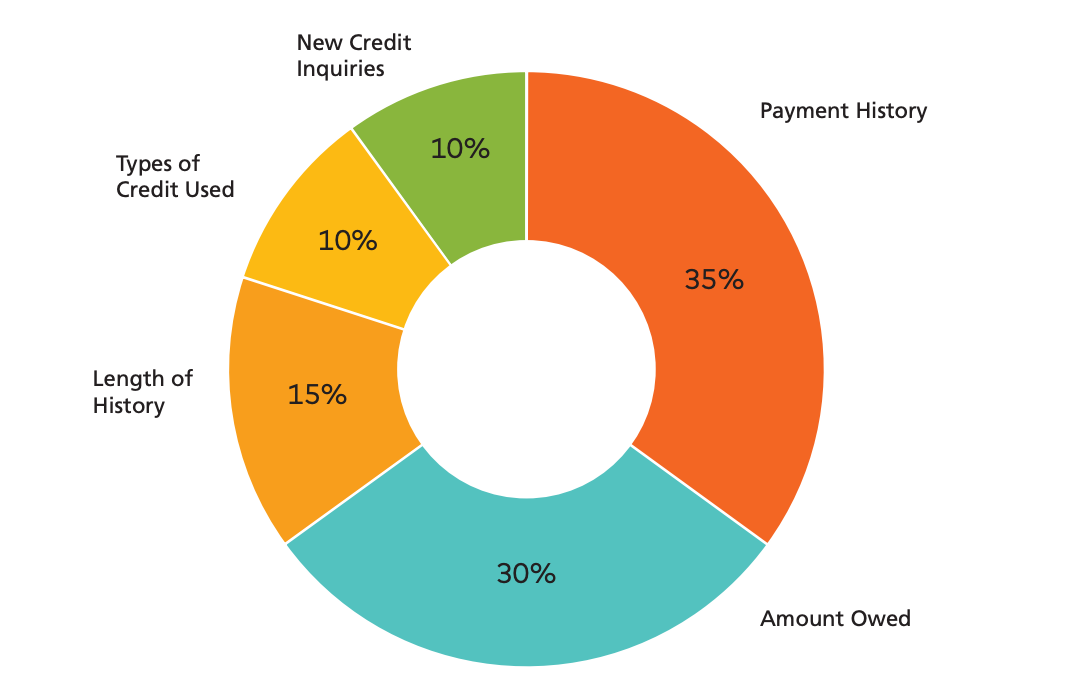
There are five major factors that are considered when developing your credit score.

Payment History

Is the most important factor in credit scoring. Even one missed payment can have a negative impact on your score. Overdue bills or late payments will lower your credit rating.

Amount Owed

Having high balances or too much debt can heavily affect your credit score. You should keep your credit card balance at 30% or less, meaning only charge up to 30% of any card’s available limit.

Length of Credit History

The longer you’ve had a credit line or product is better for your overall credit score because it shows that you have experience handling credit. Opening new accounts or closing existing accounts can lower your average credit age.

credit score pie chart, payment history 35%, amount owed 30%, length of history 15%, types of credit 10%

Types of Credit Used

Having a diverse portfolio of credit accounts, for example a car loan, credit card, student loan, mortgage or other credit products, serves as indication of how well you manage a wide range of credit products. However, not having multiple types of credit, won’t destroy your score.

New Credit Inquires

Keep your credit applications to a minimum. One or two inquiries in 12 months won’t hurt much, but several inquiries, in a short period of time can hurt your score. (Note: checking your own credit report will result in a “soft” inquiry, which does not affect your credit score.)

Credit Building 101

Whether you’re buying a car or house, applying for an apartment, or securing a loan, your personal credit score impacts every aspect of your financial life. Even if you don’t have a credit score yet or a “strong” one, building good credit is possible. Here are a few basic ways to build and maintain a favorable credit score.

First thing’s first, what is a credit score?

Simply put, your credit score is a number that serves as a predictor of how likely you are to pay back a loan on time. Credit bureaus calculate your credit score considering information such as payment history, current unpaid debt, how much available credit you’re using, bankruptcies, and foreclosures. Scores typically range from 300 – 850. Higher scores indicate a greater likelihood that you will make a repayment and are less of a risk to a lender, so the higher your score, the better. Any score of 670 or higher will make you more likely to be approved for a loan, get better interest rates which save you money over time, and qualify you for more financing promotions. 

How can I establish or improve my credit?

  • Open a credit card. This is probably the easiest and most efficient way to establish credit. There are many cards to choose from, so do your research and see which one is a good fit for you. If you haven’t accessed credit before, you might need to start with a secured card, where you put down a deposit to start using the card. Start your search by looking for cards that are tailored for people without credit history. One thing to note – if you have a low credit score, and already have a credit card, taking out a new card will not help improve your score.
  • Strategize your spending. Use your credit card responsibly. Only make purchases with your card that you can afford to pay back. For some, a good strategy is to only use credit for one type of purchase – utilities, gas, or a cell phone for example. Then you can better manage your spending each month. You never want to max out your credit spending. In fact, if you keep your use of credit below 30% of your credit limit, it will help your score. The lower the balance, the better.
  • Pay on time. Once you have a card, you need to establish your reputation as a responsible borrower. Do this by paying the bill on time, and in full, every month. In the event you cannot pay in full, pay the minimum payment and stop using the card until your debt is paid in full. If you are carrying a high balance on a card already, speak with the card company about a payment plan, and focus on getting the balance paid down. Paying off balances also boosts your credit score.
  • Use monthly bills. You don’t have to open a credit card to establish or improve your credit. Paying monthly bills, like rent, utilities, and streaming services on time can establish a credit history or boost your current score when added to your credit report. Consider credit building tools, like Experian Boost that report your recurring on-time bill payments and help boost your score over time.
  • Don’t let just anyone “run” your credit. When applying for a credit card, trying to buy a car, or securing a rental agreement, it will be necessary for the company to run a credit check. Be selective about how often this happens. Too many credit checks can negatively impact your score.
  • Dispute incorrect information. When a lender runs your credit report, you should receive a copy to review. You also have the option to run your own credit report for free using tools like Credit Karma. Take a look at the report, and verify that all information is correct. If something looks off, such as a credit card you don’t own, call the credit reporting bureau that provided the report to learn more, and get the information corrected. Companies like Dovly can help you identify and correct any information that may be hurting your credit score.

Take charge of your credit score by knowing where you stand and making smart decisions on spending. If necessary, utilize payment plans to establish or improve your credit history. If your score is already high, keep doing what you’re doing! Having good credit is important when it comes to personal financial stability, and can be a factor when securing capital to start a small business too. Maybe even more importantly, maintaining a solid credit score opens many doors, increases opportunity and is a primary factor in determining your access to affordable financial services that can make a different in your life daily.

About Master Your Card

Master Your Card is a community empowerment education program sponsored by Mastercard, that works with committed partners nationwide to bring information about the benefits of electronic payments technology for underserved communities to build brighter financial futures. The program has facilitated presentations and workshops in numerous cities around the country, provided financial education to tens of thousands of students and reached millions through partners’ initiatives and education materials. 

mastercard logo